what could have been any different for me this time than
last year? fewer movies, that's all.
saturday, september 04, 2004
Finally caught Hero on the big screen with a a group of friends yesterday and was glad to see that it lived up to my expectations. Both aurally and visually the film's expensive attention to detail and style pays off on the big screen. The general opinions about the film were mixed, and all the talk I heard in the crowd after the end credits began to roll indicated that people didn't think too much of Zhang Yimou's movie. Crouching Tiger Hidden Dragon was mentioned in a couple of threads: I read somewhere that Hero intended, in part at least, to hit the same audience bracket as Ang Lee's West-friendly flick. Mercifully, this film eschews the sentimental mush of Lee's venture. And I didn't sense any attempt to claim something remarkably deep in the story, although I could be mistaken. The Rashomon-styled flashbacks with their different colour schemes are the strength of the film. And the lyricism of the fantasy is worth the price of the ticket. But was it ever unclear that this was a fantasy? A few stray complaints about "how do you expect us to swallow all those sequences with people flying and defying all the laws of Physics?" tell me that perhaps it was. However, both Newton and his theories came a lot time after this flick;)
sunday, september 05, 2004
Asambhav: The Impossible: Rajiv Rai's latest venture offers more proof that he has lost the accidental flair and zing evident in marginally better flicks like Tridev. Aside from giving us Viju Shah (credited here as well as in a rash of recent films as Viju Sha). Rai has been responsible for showering audiences with some of the worst scripts, dialogues, and acting this side of a lunar eclipse. His latest flick even had a warning in its title, but clearly no one paid attention. As if to remind us of our errors, the film opens with words flashing on the screen: "TERROR STRIKES ANYTIME ... ANYWHERE ... ANYONE..." In keeping with Bollywood's tendency to produce immature imitations of things seen in Hollywood flicks, Rai decides to combine Brian de Palma's favourite split-screen device with a bad trip. The result is a 2.35:1 screen split further into smaller vistas, each bearing indistinct visuals and unreadable credits (the screen is split into three horizontal bands; the central band is split vertically;
the left pane has a sequence of stills of the actors; the right
pane has their names). Is this a subtle plug for the zoom feature available on most DVD players? That Rai is completely blinded by false notions of his abilities as an auteur is evident from a screen credit that reads "story and original concept: rajiv rai". Watch the end credits carefully, and you'll even notice a singing credit for him!
Before we proceed to a detailed analysis[sic] of this masterpiece [sic] here's the gist of the goings-on: The Indian PM (Mohan Agashe) on vacation in Switzerland is held hostage (covertly), to be used as exchange contraband between terrorist organizations. An undocumented algorithm for choosing the best candidate to devise a rescue plan shockingly selects Captain Aadit Aarya (Arjun Rampal), who proceeds to take his own sweet time messing around with song n' dance routines, comic interludes, bad hamming and general smirking and muscle flexing before doing the impossible (whadda pun!).
We begin our analysis with plot devices. Most songs serve perfunctory purposes that are well-defined in the unwritten classic Bollywood Filmmaking for Dummies. We choose some rare nuggets instead. Question: How do you prove that you are willing to accept the risk of losing your life in a dangerous mission? Answer: Quote your father's rank and position and mention that he achieved viiragatii in some significant skirmish (in this case 1971). Question: How do you provide subtle proof that you invested zero time units in background research for this movie? Answer: Have the top brass in the movie provide a code name like "asambhav" (impossible) for a covert mission. (Don't they usually choose positive morale-boosting names like Vijay? Imagine naming your next mission Operation Paraajay!). Question: How do you make a weak attempt at masking the fact that you are a member of the club that filches the variable film-speed technique? Answer: Design a composite based on cogs from different movies (The Matrix, Lock Stock And Two Smoking Barrels, Snatch, 13 Ghosts, Resident Evil). Task: Design a naach-gaana sequence that will (a) satisfy the north-indian audience (b) indicate that the lead pair are officially in love (c) allow you some level of pitiful creativity. Solution: The song "goliyaa.N", which (a) uses words and beats common to the clichéd notion of popular Punjabi numbers, (b) conveys through trite visuals the adequate level of hornia exhibited by the hero and heroine, (c) serves as an exercise in finding as many words ending in "yaa.N" as possible (ranging from the simple saiyaa.N, baiyaa.N, goliyaa.N, goriyaa.N, chhaiyaa.N, paiyaa.N to neologisms like muskaiyaa.N). Question: Provide another example of a famous filmic device filched from abroad. Answer: The use of recursive mirrors for Parmar (Yashpal Sharma) pondering the identity of the traitor atthe embassy. One must also note that "chaahe bhar de jholiyaa.N" comes with the subtitle of "give in to me". Alert ears will note that the background score (sample-master Viju Sha again) borrows merrily from Carmina Burana and Deep Purple's synthesizer riffs. The end credits mark the climax of Rai's fetish for the split-screen device: the credits roll over a background with three panes nested inside the main frame, with the left and right panes featuring fragments from the shooting, playback recording and rehearsals (what? Rehearsals??).
We now move on to acting achievements. This will be a very short segment. The only person who seems to enjoy himself in the film is (predictably) Rai favourite Naseeruddin Shah, who gets to play a superficially cool arms runner called Sameer "Sam" Hans (and even gets to belt out a song on the soundtrack). Arjun Rampal never had any acting abilities, and should move to being a stunt double in zombie movies. Priyanka Chopra ends up looking a lot like Parveen Babi and should also consider a career move like the one recommended for Shri Rampal. Ramsay movie favourite Rajesh Vivek shows up as a verse-spouting "Panditji" at the Indian Embassy in Switzerland. One must note at this point that it is really shameful to see how the Indian Embassy and its staff are depicted in this film (mercifully, people will realise that this is all fiction -- it's only a movie, it's only a movie, it's only a movie). Milind Gunaji is miscast yet again as a terrorist leader called Ansari. Mukesh Rishi deserves a special award for providing a nearly flawless imitation of Kiran Kumar. Tom Alter appears yet again to play some firang. This time he's called Brian, and his dying words are "hail hail mother mary jesus". Given that this is a Rajiv Rai film you have characters with strange names like Yousan Baksh (Mukesh Rishi), Dibraal (Arif Zakaria), and Rafiq Maabros.
We now move on to (un)cool sequences. A clear candidate for the B-movie archive is the sequence where the Premiere (Agashe) tries to provide hints to Aarya (Rampal) about his being held hostage. Another classic indication of this being a rank reeking bad film is the presence of scenes where people congregate in a loose line or semi-circle and wait for their turn to interject with a few lines of dialogue that they have been assigned. Another sequence involves two women assassins shooting each other as their targets move aside.
The only two honestly cool aspects of the film were: (a) the use of a chainsaw (b) the content of the video-taped broadcast by the terrorists that comprised a reference to Daniel Pearl and even a line that ended with (translated) "... we will also break an international treaty just like America did".
And finally, cool bits of dialogue. How about the badly-in-need-of-a-diction-checker line "apane aa.Nkh se dekhakar aa rahii huu.N"? We have cheap poetry with "aap ne jab se kiyaa ##nuclear## vispot/tab se pa.Dosii desh kaa chhuuT gayaa la.ngoT". And there's a touch of the double entendre with "aur pratiikshaa mat karavaaiye naa pa.nDitajii, baahar [pause] nikaaliye naa".
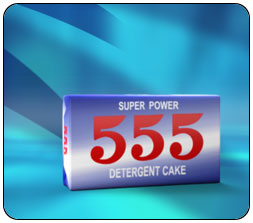
Garv: Pride and Honour: Movie heavy Puneet Issar decides to change the spelling of his name to Punit Isarr and makes his directorial début with this loud Veergati-esque drama-emotion-violence-revenge snorefest (coincidentally starring Salman Khan). Any attempt to describe the waste of film and human resources in this film would be another waste of time. It's appalling that there are wealthy idiots (is that even a contradiction in terms?) willing to shell out dough to back pathetic attempts at filmmaking like this. And how can you encourage someone who had nary a shard of prowess in filmmaking to make his directorial début?? There's more of that slapdash film-speed altering gimmickry that now seems like a visualisation of the vinyl scratching that DJs indulge in. And there's Rajpal Yadav hamming gloriously as an informer called 555 (in devanaagarii of course). The vocals on Aadesh Shrivastava's background score continue to employ fragments that remind me of puuryaa dhaanashrii. Avid subtitle mongers (also fans of Bollywood courtroom sequences) can relish the fact that the words "your honour" are subtitled as "mi lord". And you have enough bad dialogue. A few samples: gaay ko kabhii apane sii.ng bhaarii pa.Date hai.n??; vo hamaare kamiiz pha.De jaa rahe hai.n aur tuu kahataa hai kii tamiiz me.n rahe.n?; puliis\-waalaa huu.N ko_ii duudh\-waalaa nahii.n; abbe deshapaa.nDe, tuu to bistar pe pa.Dii solah saal kii lau.nDii kii tarah ghabaraa rahaa hai ...; khuubasuuratii Dhakii hu_ii zyaadaa achchhii lagatii hai; mai.n maut ko takiyaa aur kafan ko chaadar banaakar oDhataa huu.N. And despite using heavy words like narasa.nghaar (massacre) and kaulaa maal (virgin), they can't get their basic genders straight: sarakaar hamaarii aur sa.ntulan tumhaarii. And there's a classic bad scene too: This goon called yeDaa (debutante Stephen Fernandes) is in the process of threatening a producer called Chopra. He pours bullets into a glass of whiskey, a glass of soda and a glass of water. He then offers these as choices (along with a "direct" option), asking the producer how he'd like his bullets. And to round it all up we have exhibits for dumb-repetitive-action-for-protagonist (SK tracing out an X to all whom he threatens), dumb-acronym (maap-po-se meaning "maharashtra police sevaa" -- god knows how they came up with "maa"!), and dumb-CMM-terminology (D-final meaning "death final" -- bone chilling!). If you're thinking of sending in letters to "Reader's Don't Digest" don't bother. Take a chaTapaT chuuran tablet, an ampule of liquid Anacin, and go watch a Joginder movie.
Death Wish III: This is the first movie in the Charles Bronson common-man-as-vigilante series known for its violence and interesting choices for music directors (Herbie Hancock, Jimmy Page). Page does the honours on this venture (playing both electric guitars and synthesisers), and there were a few interesting cues. The film itself feels like a lot of those 80s follow-up ventures that took the characters introduced in the first flick, sucked out all need for character development, and dove straight into the business with a cold distanced approach that (at least in this case) gave the goings-on a slight video game quality. I wasn't completely thrown off by the movie, and the violence was disturbing. What was even more disturbing was the locality the action was set in. It's always interesting to see the "lesser" side of a country that trumpets its prosperity and progress and labels itself as a land of opportunity when the basic problems of poverty and crime remain just as unsolved as back home in India.
monday, september 06, 2004
Prarambh: the beginning is a minor piece of filmmaking starring Vijay Raaz and Gauri Karnik (and a narrative voiceover by Goga Kapoor) and would fall into the genre of the small movies made during the 80s and 90s dedicated to some social cause. Raaz and Karnik play sparring scheming temple mendicants in this flick that even gives Raaz a chance to claim a singing credit. The source of the narrative is a short story by Late Shri Jayanti Dalal (any background information would be helpful). The film is a straight piece of work and betrays a made-for-TV approach to a certain extent. Wonder if the rash of this and other minor movies in the recent past is a trend.
 I've just started reading The Third Deadly Sin by Lawrence Sanders, the last (I had started with The Fourth Deadly Sin, returned to The First Deadly Sin and wrapped up The Second Deadly Sin two days ago) and page 15 had an interesting little nugget:
 .
.