Wednesday, October 21, 2009

deus ex musica: kollywood kenodoxy

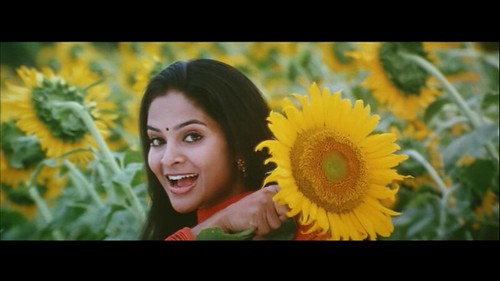
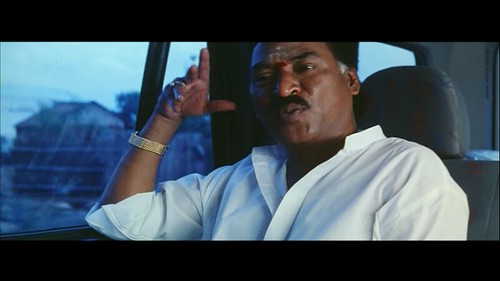
It is time now, O faithful followers of Kollykrap, to return to uncovering the gems of Englishkaran. largeFlower We turn our lens to two other people on the cast roster. The first is la femme Madhumitha (for those unfamiliar with the South Indian fetish for the 'h' as a suffix, please read this as Madhumita). She plays a lass named Sandhya who bears the conventional undiscovered great voice (aka Shreya Ghoshal). For the first half of the film, she's also our heroine. She happens to sing a song surrounded by pastoral props and that song manages to make it to a CD that plays in the car of a famous music director named Deva played, dear attentive reader, by Deva himself. Deva is also the second person, who interests us today, because he also happens to be the music director of the film; put another way, dear reader with a nose of navel-gazing nods, Deva gets to pretend to be impressed by a voice carrying a tune that he composed. It comes with complete orchestration, of course -- something that, in the world of desii-wood, you get for free (especially in farms, fields, jungles and any other place that was chosen to host a ProTools exhibition). Of course, Deva appears pleased with the discovery and makes an attempt to sign the lass up (She don't look like no Shreya Ghoshal, but she shoor sounds like 'er).

Now, with your permission, dear bearer of a patient pair of eyes, I will leap across the intermission to the tail of the film, where, to our bountiful befuddlement, we find that the lass has managed to flit past all obstacles and made it to the recording studio to sing (gasp!) another of Deva's compositions. This song, dear anxious ones, is what you have been waiting for. Here is the complete unadulterated dump of the subtitles accompanying the fictitious warbling in a fictitious world.


oh friend! oh friend!
my dear friend!
touch the peak sans wings!
oh friend! oh friend!
my dear friend!
touch the peak sans wings!
oh friend! oh friend!
my dear friend!
bundle the sorrow and
throw into the fire
moon doesn't have legs
still, isn't it walking in the sky?
clouds doesn't have hands
still, isn't it swimming?
streams doesn't have a mouth
but don't they sing?
oh friend! oh friend!
my dear friend!
touch the peak sans wings!
without curves
can we climb mountains?
flowers smile even
if they live for a day
don't the kites fly sans wings?
waterfall doesn't bother for
the fall and yet it smiles
oh friend! rubber tree has
many wounds on its body
oh friend! it secretes milk
despite the wounds
whatever vanishing in the west
doesn't mean death
east has never forgotten to brighten
the stitching needle
has only one eye
it doesn't feel for its disability
but it stitches clothes
troubles are not thorns but
a ladder to a forthcoming success
even if a torch is held upside down
it would glow upwards
no heights sans sorrows
rainbow won't be visible
if you bow down
make a floor design
after the full stop
sleep with one eye until you succeed
oh friend! oh friend!
my dear friend!
touch the peak sans wings!
oh friend! oh friend!
my dear friend!
bundle the sorrow and
throw into the fire

devaa

Saturday, October 17, 2009

it's all in the details

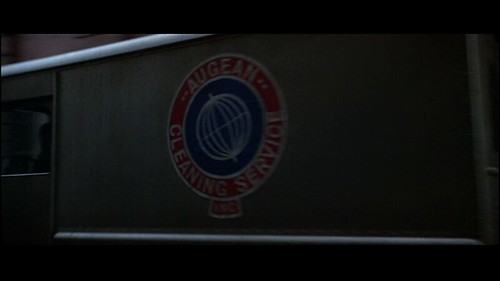
It happened when I was watching Three Days Of The Condor a week ago. I had caught the film on some cable channel years ago and surprisingly seemed to remember most of the important details and events in the film. I had completely forgotten what Condor (Robert Redford) managed to find out through the course of the film; I had also missed the 70s thriller earmarks the film bore: All The President's Men (Redford was in that too), The Parallax View are just two other examples. I also hadn't earned my share of viewed films to understand the various techniques employed in the film. cleanup Watching it again was thus, in several ways, quite rewarding. I have also started noticing all those little details that excite trivia-mongers: licence plates, phone numbers (both fake and the unfortunately real), posters, marquees, commercial brands (subtle product placement) and little things that pop up in the wee corner of the frame. That annoying tic surfaced during the scene when a clean-up crew arrives to "dust" the American Literary Historical Society (the cover for a CIA hub whose crew lay dead). As the van passed I noticed the name of the company: Augean Cleaning Service Inc. Although clearly a front in the context of the film, the firm probably doesn't exist in real life (Google gave me nothing). If it's an invention for the film, it's a great one. Here's why. Augean clearly refers to the King Augeas in Greek mythology, most famous for his stables that housed the most cattle in the nation. These stables were never cleaned until Hercules got his famous assignment (the 12 Labours). The fifth labour was cleaning out these stables. Now you see why the name makes sense. Bravo.
Friday, October 09, 2009

college hijinks: kollywood style

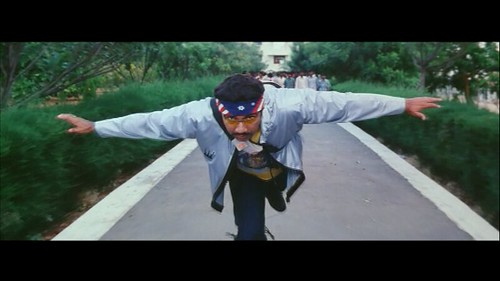
It all started with finding the wrong DVD in a case that purported to contain the digital dreck of International Khiladi. Sathyaraj doesn't look like Akshay Kumar; Namita and Twinkle Khanna are sufficiently unsuitable as lookalikes. And Tamil script does not look like English (what was the last Bollywood DVD that had devanaagarii on it?). collegeDude Still, Englishkaran (loosely translated: English dude, aka अंग्रेज़ीवाला) had supposedly been a big commercial hit. Since successful mainstream cinema -- be it any flavour of देसीwood -- usually promises to be rather easy on the brain and high on vacuous ambition and a misplaced sense of greatness, this movie didn't seem like a bad alternative with a pinch of iodised salt.
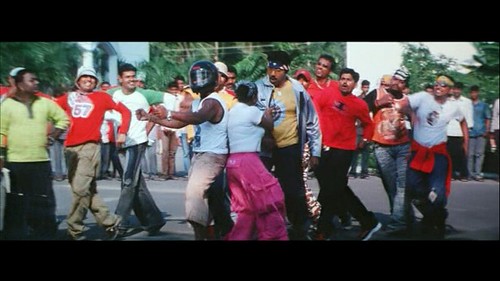
As it turned out, the film was a minor gold mine. As a paladin of piacular pictures, I am compelled to share some of this wealth with you, dear reader. The songs make the most accessible offering. The subtitlers clearly learnt their language in some IT park and nursed lofty ambitions of being poets in the vein of an unholy union between the Romantics and Borges. Without further ado, I present, the title song. As a bonus, there's a shot at the end from a moment in the film during which a rather unusual prop makes its appearance.


these are hard, medial and nasal consonants respectively
good tamil, rich tamil, threesome tamil i can talk all types of 'tamil'
nicely
still i am an english person
whatever you can give, offer it
don't refuse whatever offer
don't advertise your wealth
don't lose confidence
shouldn't attain studies
accept criticism
disgusting!
in water scarcity
our nation is struggling
but a nursery rhyme says
'rain rain go away'
a movie song says 'digital gandhi'
movie climax would have cops coming in the end
scientists are our guys,
...go and check it
sprinkle some pepper and ...
it is said to treat sneezing problem
still i am an english person
all tamil nadu ornaments are off to speak hindi
ask the kids to sing
'best dear it is the best'
if the road side neem tree
sports a dot
an hundi is hung on it
like a fast food joint...
... egg and milk are poured into snake mounds
even if hundred periyars come...
...the nation wouldn't reform
there were 3 tamil academies earlier
but now there are umpteen caste parties
i am a chaste tamil
still i am an english person

weirdProps

Wednesday, October 07, 2009

logo bar, search baar baar

Google's new logo is dedicated to the bar code. It's as good as being a tribute to The White Album or Led Zeppelin's fourth album. Two in one. Just for fun.

Google Barcode 2009

Saturday, October 03, 2009

nominal atavism

After hitting the marquee Wake Up Sid is making news not for being a clone of Farhan Akhtar's ouevre but for having caught the ears of Raj Thackeray, the paladin of puerile pugilism and ringleader of the band of boeotian baboons called the Maharashtra Navnirman Sena. All because, predictably, for having characters in the film refer to the city now officially known as Mumbai as what it was formerly known as (Bombay). In the interest of commerce, Karan Johar rushed to make amends. MNS isn't happy and wants more. The chief minister Ashok Chavan insists that "Raj Thackeray is not a constitutional authority. Karan Johar should have come to the state government if he thought that the issue was so serious." The issue was serious and Raj Thackeray has, in the practical sense of the word, more power than most constitutional authorities (whatever that term means). After all, Raj Thackeray can still stand after pronouncing that "no film producer had the right to change the name of the city from Mumbai to Bombay."

the turning of the phrase

I finally managed to get to The Reel Truth: Everything You Didn't Know You Need to Know About Making an Independent Film, which contains lots of information about the things you have to worry about when you are trying to make your movie. I jumped right to chapter 8, which is all about what you have to do just to use your favourite song or piece of music in your film. The nuggets of trivia, however, did not grab my attention in the chapter as much as a couple of phrases I don't remember seeing before and some unfortunate examples of lazy talk and English abuse.

A quote from Rosalind Lawton ended with "Of course, you can try to negotiate, but if it's after the fact, they have you completely over a barrel." Despite having understood what she was saying, I was curious about the phrase. It turns out to have its origins in America and means that they (she is referring to companies that hold rights to the music you want to use) have you at a disadvantage; you are helpless and in their power. Although the local flavour was welcome, I wish she had just chosen simple words instead.

Adam Fields, the producer of Johnny Be Good describes how Chuck Berry got paid $100,000 for the use of his song in the film. He starts with "We could never get in touch with him, and we were down to the wire on the movie." This is one of the numerous contributions from the world of sport and has evolved to describe a tense situation whose outcome is impossible to predict until the end.

Finally we get Jennifer Lane talking about the problems involved in getting rid of a song from the film prints. Her quote ends with a sentence that reeks of laziness: "It's a tremendous hassle financially, emotionally and timewise." Times like this make you wish "timeally" was a word (or would she have settled for "temporally"?)

Thursday, October 01, 2009

from 12 to 7: vishal gets the raashee rash

If articles floating online are to be believed, Vishal Bhardwaj is working on a script called 7 Husbands and seems to have to roped Priyanka Chopra in to play 7 brides for 7 men. Since the rushes of What's Your Raashee? are mentioned, one is inclined to dismiss this as another case of striking the hot iron. Satte pe Satta becomes Ek Sati Saat Pati?


[Cross-posted on the Vishal Bhardwaj blog]

Friday, September 18, 2009

she's the man

Dil Bole Hadippa!, the latest snowball of Bollyturd from the guaniferous garden of YRF rolls down the slopes of mediocrity towards the marquee. It brings with it enough dirt to bury all the good Shahid Kapoor may have done with Kaminey, expected references to every dazzling dingleberry ever doled out by the camp in the last 20 years and enough regressive filmmaking to send us back into the Bollycaves. But what it really offers is a chance to watch Raspy Rani come out of the closet -- it's going to be a pleasant surprise to see a face (with a beard and turban to boot) to match that manly voice. This might be a welcome change after the scary visages of Thoda Pyaar Thoda Magic (very very tragic).

Wednesday, September 16, 2009

the third rogue

Who else but the director of the Tamil remake of that royal star vehicle to helm the Hindi remake? Prabhu Deva is all set to start his Bollywood chargesheet with Salman Khan replacing The Prince and Joseph Vijay and Ayesha Takia (who had declined the role in the Telugu original) replacing Ileana D'Cruz (she with the strange hips) and Asin (Suryaamir) Thottumkal. Topless Khan seems like the perfect star to take the place of that smirking stylistically misguided missile of ineptitude.

The soundtrack's not as rewarding as the promos. There's the promo that boasts some great voiceovers over what is otherwise a standard issue trailer showcasing a star, a pretty face, nauseatingly bland stylised action intercut with more nauseatingly bland stylised action and the obligatory dance sequences.


he walks casually
he talks casually
he eats casually
he loves casually
he kills casually
but (pronounced: buh -- rhymes with 'duh' -- T) he dances seriously

मुझे खुद को भी नहीं पता कि मैं कितना कमीना हूँ is the kind of line that would never have made it to Vishal Bhardwaj's film.

The second trailer's the official high-quality loud monster that features font styles that might fit well in video games and graphic novels (in fact, all the stills seem like they came from pages of some violent graphic novel). It opens with agonising an blinky-winky display of shots with ASLs that you would need a vernier calliper to measure. Lack of content tossed at you at the speed of constipated humming birds. The South Indian spelling bug takes over as you are told that it's a Prabhu Dheva film. That the action director is someone called Vijayan is quite obvious when you see goons spinning into the air on a semi-vertical axis after being punched. But the best is yet to come. You realise that the filmmakers have sprung a conceptual coup. This film is not merely a remake of a brain-dead actioner. It happens to be a showcase for Bollywood's version of a human transaction manager -- one that will leaving CICS, MTS and Tuxedo light years behind. It is all clear when you hear the last line on the trailer.


एक बार जो मैंने commitment कर दिया उसके बाद तो मैं खुद की भी नहीं सुनता

Monday, September 14, 2009

reel me this, reel me that

Alice Doesn't Live Here Anymore [October 22, 2006]: From the opening sequence (a bleeding Technicolor 1.33:1 frame within the 1.85:1 frame offering a rather wicked version of Dorothy in Kansas with a tip no doubt to Douglas Sirk as well) to the restrained optimism of the end, this film is a showcase for great performances (led by Ellen Burstyn whose Alice is a fascinating study of the steadfast, determined American woman who hasn't lost her sense of humour) and for Martin Scorsese's enthusiastic mix of a variety of techniques: filters, tracking shots, a nuanced choice of songs on the soundtrack, movie references -- The Postman Always Rings Twice -- and showpiece scenes (my favourite one is Vera's bad day intercut with Alice and Flo talking about Alice's problems). The DVD also has another rarity -- a commentary track featuring Martin Scorsese (it is always a pleasure to hear him fire one exuberant salvo of words after another).

Waitress [October 01, 2008]: It's not hard to be reminded of Scorsese's film when watching Keri Russell in a fantastic performance as Jenna Hunterson. The film's trailer was an exceptionally good one (the kind that piques your interest in a film instead of being a showcase of the best bits of a piece of creative guano). It was only several months later that I settled down with the DVD in the player. The film confidently mixes the essence of a chick flick with a compassionate study of characters and humanity laced with broad strokes of whimsy and constant cheer. Unfortunately, the senseless murder of Adrienne Shelly has robbed us of a filmmaker who seemed poised to offer so much more.

what is dev benegal up to?

(If you've been following Dev Benegal's blog, you already know)

The man who helmed that fine cinematic adaptation of Upamanyu Chatterjee's English, August years ago and the under-sung darkly funny Split Wide Open has been struggling for years to get a DVD of the film out. Despite several posts that promised salvation and some that were quite depressing, a post appeared with a ray of hope. This, of course, comes amid posts dedicated to his new film Road, Movie (that comma seems like a tribute to the Madna movie) starring the ever-adventurous Abhay Deol. There's a teaser for those interested. Those lucky enough to be in attendance at the Toronto International Film Festival on September the 18th are even luckier.

[october 07, 2009]: Another trailer's up -- it's a montage of moments after we get the general idea that our protagonist is out to discover himself. I don't see anything extra being revealed; and I love that background score.

Saturday, September 12, 2009

the successful tamperer

The recent release of Tere Bagair on the YRF Music label marked yet another success for Sanjeev Kohli, the son of the late Madan Mohan, who has made a name for himself as a Lucasian archaeologist. Digging through HMV's cavernous vaults, he unearthed many a rarity (including several not-so-rare elements made "rare" simply thanks to the myopic dullards running the shop) and converted them into compilations for release. These compilations were often marred by the liberties taken with the source material -- musical prologues, interludes and outros were summarily clipped to make way for more songs on a single cassette or CD; faders were twirled arbitrarily to produce a continuous stream of music rendered creatively unsatisfying thanks to being tampered with. The crown jewel of this series of commercial ventures came with the Revival series, where present-day session players and hacks were unleashed on the creative output of acknowledged greats from the Golden and Silver ages of music (don't you love those anachronistic soulless synthesizer motifs?).

There are hints of foul play in the taglines on the cover: a rare treasure ... 15 unreleased songs revived and digitally mastered in 2009. The word revived when Sanjeev Kohli is nearby can mean only one thing. More evidence comes from two places.

The first is this bit of text below the track list:


all songs composed and recorded by madan mohan during his lifetime
these songs were from shelved films between 1964 and 1972
instruments added in 2009 to enhance the quality of old recordings

The second is the credit for additional musicians in the inlay sheets (Incidentally, technical supervisor Victor Dantes was a comrade-in-arms in a similar successful experiment called the "Legends" series).

This is what happens when you have people with insufficient technical chops to pull off a remastering job. One must also credit the purchasing majority that doesn't really care.

An interview with Sanjeev Kohli posted over at PFC contained some revelatory comments from the man himself. Here is what was said on the subject of the reverbs and other confetti added to the tracks:


I have one serious complaint against the ‘Legends’ series of music compilations. I feel that by adding reverb, the digitized songs on these CDs lost their rich depth of original vocals and acoustic orchestration. They sound hollow!

You are right in your observation. But the reverb effect was added to nullify the hiss and scratchy sounds of old records. That does muffle the sound a bit but the general public seemed to have liked the sound! Perhaps the connoisseurs might feel differently about it.

Earlier in the interview, Kohli talks about Tere Bagair (I have taken the liberty of emphasising the portions of interest for you, O patient reader)


Now the new album- 'Tere Bagair' (released by Yashraj Music) will present all the ten songs from 'Treasure Unrevealed' in full, extended versions and it will also have five more tracks originally recorded by Madan Mohan. This album will be a treat not only for the fans of Madan Mohan but also for the fans of singers like Lata, Asha, Rafi and Kishore because they will get an opportunity to experience many original Madan Mohan recordings in their favourite singer's voice. Moreover these songs were previously either unreleased or inaccessible. Even those listeners who had already heard 'Treasure revealed' would find many new things in 'Tere Bagair'. The recording quality of the album is excellent since the master tapes have been used to reproduce the songs. In some songs, I have re-recorded the tabla tracks and added some harp sounds but even that is done in such a way that it would perfectly fit in the sound of the 60s, when those songs were originally recorded.
You can't compare 'Tere Bagair' to 'Veer Zaara' because ' Tere Bagair' is an album of out and out Madan Mohan originals whereas in 'Veer Zaara', his tunes were modified to suit the times and also the film's requirements.


This, ladies and gentlemen, is a man of commerce talking.

stereotypes on the streets of Pune

(being an unpolished draft from a visit back home several months ago)

There is a reason Pune roads are never going to get better no matter how many flyovers you build, no matter how many streets you convert to one-way traps, no matter how many regulations you prescribe on termite-eaten papers of law, no matter how much you try to subvert the laws of physics with the power of unenforced law. That reason, dear hapless smoke-ingesting, Brownian reader is the rich and variegated set of stereotypes of riders and commuters unleashed on the streets of Pune. This helpless spectator presents a few.
The Light Brigade: Even if Tennyson's poem loses its impact because people no longer cared about the Crimean war, it would survive thanks to finding another image in the real world –- this is the critical mass revving up near a traffic signal awaiting the change from red to green desperately like the incontinent in search of a ceramic throne. Even before the chromatic switch, a deluge of multimodal impatience sweeps the intersection and intersecting streets. It's the chariot race from Ben Hur duplicated across space and time.

Neo wannabes in the Metropolitan Matrix: You're familiar with the commuters who behave as if they had received an internal memo saying they were Neo Anderson and that they were the One. Assuming all surrounding traffic to represent the Matrix, these people waltz across crowded intersections (causing even graver deadlocks), shimmy through cracks between cars, along invisible tracks connecting the front wheel of a scooter to the rear wheel of a motorcycle making a game of snakes and ladders look like an exercise in drawing perfectly straight lines.

Friday, September 11, 2009

reel notes from long ago

(Being another little collection of thoughts about films viewed months and years ago)

Equilibrium [December 29, 2006]: This tale of dystopia chooses to be a thriller instead of exploring familiar ideas like the suppression of emotion using drugs (Brave New World's soma -- an idea seen in movies like THX 1138 -- becomes Prozium, a portmanteau of Prozac and Valium), the destruction of art (just books in Fahrenheit 451) and the totalitarian state that is constantly monitoring its people (1984). It chooses to be an action thriller and a showcase of Gun Kata. I liked Gun Kata and that's the sole reason I have to watch Ultraviolet some day. Christian Bale does no wrong with the character of John Preston both in the dramatic and the action sequences. Another William Butler Yeats poem makes it to the canon of sci-fi/apocalyptic films. Knowing about Tetragrammaton helps, as does finding out why that fight sequence in Aan: Men at Work looked so familiar.

Eye of the Needle [August 06, 2006]: This, as far as I can tell, is the only adaptation of a Ken Follett novel for the big screen. It also happens to be directed by Richard Marquand, who, thanks to this film, was chosen to direct Return of the Jedi, the most famous film in his ouevre. I had enjoyed reading the book years ago and still remembered the essential narrative elements when I finally got down to watch Donald Sutherland lead a strong cast in a competent well-paced cinematic adaptation. The camera angles and the editing seem representative of the 70s, even though the film was released in 1981. When Sutherland bumps into a motorcycle near a station building, I loved the cut to the sound of the bike as the camera follows the countryside he is riding through. I also noticed the not-so-uncommon technique of allowing scenes top open with sounds from the previous scene. Both elements are probably examples of "the hook" (see also: a lovely essay on this by David Bordwell). Oscar Wilde's The Happy Prince gets some great promotion here when Faber reads from it to little Jo. Miklós Rózsa's score, unfortunately, amplifies the attempt of the production to sound and feel very monumental; the dramatic appeal of the domestic conflict suffers as a consequence. A minimalist score exploring the various emotional textures of a few motifs might have been a better companion. Those familiar with either this film or Follett's source novel will have noted the unacknowledged debt Fanaa's second half owed to this film (with a few necessary alterations for the film to go down well with national lovers of such ingenuous cinema and nostalgic NRIs dying to throw their dollars at paeans to trite familial ideals and values). Ironically, a few years later, Marquand helmed another film, which served as carrion for the rapacious rodins of Bollywood -- the film was called Jagged Edge and we all know it well as Kasoor (in which Aftab Shivdasani became Jeff Bridges and Lisa Ray became Glenn Close).

Alag [August 05, 2006]: Powder is transmogrified into a Bollyversion seasoned with all the delicacies that make a Bollywood movie suck -- the Hindi/English nonsense mix (say it in English; now say it in Hindi; now mix 'em up), retrograde exposition (A scientist from California!) and irritating song breaks (apun kii Tolii deserves an award and a place in the Hall of Non Sequitur Shame). Plaudits must be reserved for the "story" credited to Tagore Almeida (lovely name that) and a "screenplay" churned out by Almeida and director Ashu Y. Trikha. The film tries to be a showcase for Akhay Kapoor's "talents" (he can dance! he can brood! but can he act?) and a breeding ground for bad subtitles (सिंह becomes "singh" and माहिया वे राँझना वे becomes "lover ... ranjhana! you are only my home!"). When the subtitles on the DVD got stuck, the people at the Indian store whence this VHS rip came from were kind enough to stop the DVD player and hit play again to fix the problem (the evidence was recorded for all you caring customers). It's also an exhibition of bad editing (like most Bollywood films) and a slavish adoption of technique without just cause (shoot me in bullet time!). It also had a hidden lure which drew a host of Bollywood A-listers to feature in a song at the end (this is your cheapest opportunity to see Shah Rukh Khan, Karan Johar, Abhishek Bachchan, Arjun Rampal, Bipasha Basu, Lara Dutta, Bobby Deol, Priyanka Chopra and Preity Zinta). But the film truly belongs to Tom Alter's bid for a Razzie for Worst Actor in a Foreign Film as Doctor Richard Dyer, the villain of the piece claiming to be a crusader against epilepsy, Parkinson's Disease, Alzheimer's and पागलपन. Watch him as he deliciously mouths inane phrases like "Human mind," proclaims himself "The greatest genius in the entire universe" and delivers pronouncements like "Emotion Revolution का दुश्मन है"). That, a decent opening title sequence and abuse of the Doom fireball sound make this film worth your while (barely). I leave you with a priceless piece of dialogue from the film:


tejas (akshay kapoor): क्या हम थोड़ी देर रुक सकते हैं?
purvaa (dia mirza): हाँ , sure, brake है न गाडी में

Thursday, September 10, 2009

what a big search box you have!

And I thought my eyes were playing tricks! Even though I use the Firefox Search Bar for my Google searches, I still see the search text box on the page of results. Last night, the text box and that "Search" button looked bigger. I thought I had accidentally hit "Ctrl and +" as I am wont to on occasion. It turns out that this was a little flourish from the owners of that recently granted patent.

Tuesday, September 01, 2009

bollywood's chameleon car

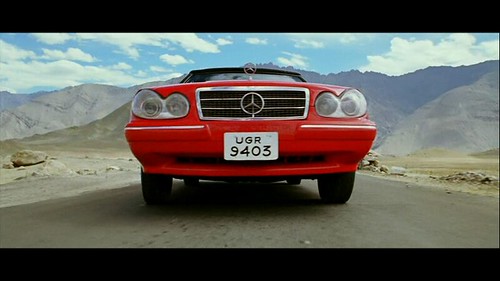
Despite its lofty meta-cinematic ambitions, Tashan manages to bore you out of your wits while also tossing one delicious gaffe after another. The continuity department was out smoking maTakaa while reels of footage were captured, digitally created and spliced into specious brouhaha. In this post we consider one of the most visible paws of the fox starring one of the two most important vehicles in the film. It's a red beauty of ambiguous parentage and schizophrenic identity.

SLK 320 front

The film opens with a red mercedes SLK 320 on the wild road accompanied by a stereo switching between a little ode to 80s rock ("She's a highway to hell" courtesy Ranjit Barot) and kabhii kabhii (the plaintive voice of the late Mukesh).

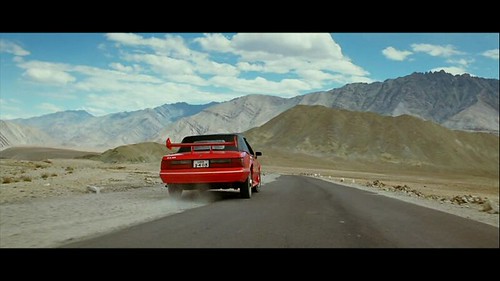
SLK 320 rear

It's a red Mercedes SLK 320 with a spoiler. UGR 9403.

And then it veers out of control and drives off the road, to the side and over the edge. The landscape looks fake, the milestone flying by is bad CG. But the worst is yet to come. A montage of obviously fake VFX shots follows to illustrate the inevitable -- the descent of the car succumbing to gravity into the water below.

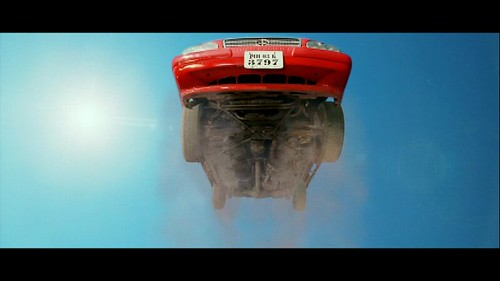
wrong plate front

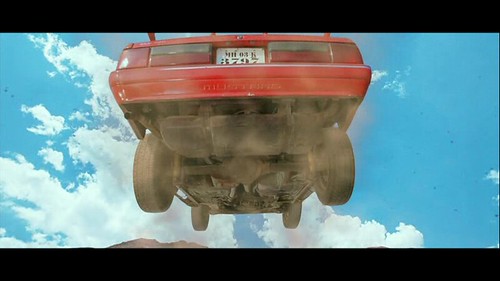
It's at this point that things become confusing. The car's licence plate goes into the witness protection programme in midair relocating, in a manner of registration, to the state of Maharashtra.

SLK 320 mustang?

A fine shot of the automobile's derriere laced with dust is marred by the word embossed on the rear bumper. I'm confused -- when did Ford team up with Mercedes?

Several minutes later, we return to the car under water.

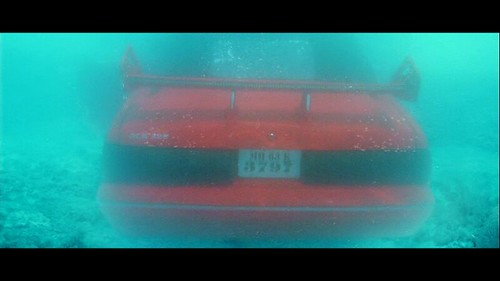
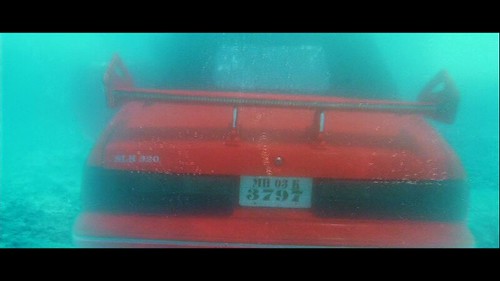
wrong plate under water

The licence plate continues to be the same as it was before the car hit the water. It is also clear that the car is an SLK 320; I can't see lower part of the bumper, so it's hard to see if the embossed Mustang is still there (I wish I had a better angle).

SLK 320 under water

Peculiar. Very peculiar.

Since this is a film laced with references to other films (with, as a later blog post may reveal, the choice of films bears a strong bias for the Yash Raj canon) and especially recent YRF productions, it is possible to construe an explanation for this gaffe and credit it as being a little in-joke. Remember the Mustang fetish in Dhoom? Remember especially that red set of wheels bearing the likes of Esha Deol? That, kemo sabe, was a Mustang. Perhaps bhaiyaajii created his own motor mash-up (Benz+Ford = Bored?). Or perhaps we're just dealing with an overpaid sloppy crew obsessed with bringing fruition to an overbaked balloon of nothing built on an idea that deserved a creative mind.

blunt beaks and stellar opposition

What compels the majority of Indian writers of English to abuse the word against in various blog posts, paid articles and various parochial portals? Does not the damage implied by the collision worry them? Do they fail to appreciate the use of opposite instead? How does one explain some random actress appearing against a superstar? Was it a game of tennis? Was it sumo wrestling? Was it a game of cards? Was it arm wrestling? Or was it squash? It seems to be none of these, for the "writers" (who really have no business wielding the pen in the language) choose this word to mean that said starlet was appearing along with said superstar. They're on the same team, on the same side. Talk about dushaasan appearing against duryodhan in the mahaabhaarat. It's time to rally against the opposition.

Monday, August 24, 2009

a blast of bappi

As we lament the passing of an age of lyrical dross so bad it was hilarious, let us pause to shower laurels on one such master stroke in the late 90s from the jewel-clad master. Boppi-da ensured the cult credentials of the Sunil Shetty/Jeetendra law and odour flick Judge Mujrim with Jolly Mukherjee belting out lailaa o lailaa. Was this Boppi-da's tribute to the Shah brothers? Perhaps we will never know. Meanwhile, we can surely sit back and relish the interplay of language, the blending of metaphors in this abbatoir of rhyme embellished with the obligatory bridge of rap. Presented below is the "neat" version of the song (no repetitions, no loops)


हम तुम दोनों मिल गए
प्यार की tuning हो गयी
हर morning तेरी हो गयी
हर evening तेरी हो गयी

लैला हो लैला तू है लैला
छैला मैं छैला मैं तेरा छैला

आ हा नज़र क्या तेरी है
आ हा कमर क्या तेरी है
आ हा अदा क्या तेरी है
आ हा उम्र क्या तेरी है

आ हा ये गाल टमाटर से
आ हा ये होंठ गाजर से
आ हा तू बोतल शरबत की
आ हा टू गोरी पनघट की

तेरे रूप की बिजली से
मेरे दिल में lighting हो गयी

आ हा तू गुडिया जापानी
आ हा तू परियों की रानी
आ हा तू चाँद पूनम का
आ हा तू कतरा शबनम का

आ हा छलकता जाम है तू
आ हा सुनहरी शाम है तू
आ हा तू model 96
आ हा तू गोरी गोरी miss

मेरे दिल के garden में
तेरे प्यार की कलियाँ खिल गयीं
हर morning तेरी हो गयी
हर evening तेरी हो गयी

Monday, August 17, 2009

kaminey: genesis

[in which it is obvious that I've seen the film]

be warned that some elements herein may be regarded as spoilers

Kaminey opens with very little of the dross that inundates most Bollywood releases these days. The dross comprises acknowledgements to various media partners, outdoor partners, brand partners, various names both familiar and unfamiliar, miscellaneous logos and the like (My Name Is Anthony Gonsalves might have set a new record with about 1 minute and 54 seconds of such sycophantic fellatio before the film's title came up).

Vishal's film opens with an acknowledgement to Mira Nair and the Maisha Film Lab in Kampala. Then there are two screens of names (including familiar ones like Abhishek Chaubey) after which we get a screen proclaiming "UTV Motion Pictures presents." The next screen bears the interesting "based on an idea by Cajetan Boy."

Maisha is the brainchild of Mira Nair and aims to be "a film makers laboratory dedicated to developing and supporting visionary screenwriters and directors from East Africa and South Asia." The first lab for screenwriters was held in Kampala, Uganda from August 3rd to August 13th, 2005. The mentors for the workshop were Mira Nair, Matthew Robbins, Vishal Bhardwaj, Steve Cohen, Sabrina Dhawan, and Sooni Taraporevala. Vishal fans will probably recognise the name of Matthew Robbins. One of the 10 screenplays chosen for the workshop was titled Roho and it was written by a Kenyan named Cajetan Boy. Vishal had more in an interview:


Where did Kaminey originate? Was it an incident or a film or a book that inspired you?
Four years ago, Mira Nair assembled writers from America, India and Canada to mentor ten students from Asia and Africa. This scriptwriting workshop was held in Kampala, Yuganda[sic]. A young writer from Nairobi showed me a script which was a story about twin brothers and what happens in their life in a span of 24 hours. It was like parallel cutting and I really liked that approach. Mira and I spoke about it at length and both of us felt that it was a typical Bollywood masala movie. I was in touch with that writer for the next six months. He also sent me another draft. Then two-three years later I asked him to sell me the idea. He was in need of money so I sent him some 4000 dollars and bought the script to make any time. I picked up that idea and added Bollywood masala and my dark and serious side to it. So now, one brother stammers and the other has a lisp.

Vishal didn't stop with merely adding the disabilities, the wide array of colourful characters, his trademark dialogue and the other elements reinforcing his belief in the utility of Bollywood conventions in interesting ways. He also tossed in a credit for Cajetan Boy. And that was not all -- Vishal decides to use the name Cajetan for one of the many characters in his tapestry. This gets us more than a couple (if memory serves me right) of utterances of the name. It is also a credited appearance, so we read the name in the end credits (those who stomped over all the popcorn on the floor the moment the dissolve to black happened can pretend they saw this).

The film's merits notwithstanding, this is one of those simple yet masterful gestures that makes people like Vishal stand out in a sea full of plagiarising halfwits and mendacious morons.

Cajetan, one is happy to report, is pleased with all this.

Friday, August 14, 2009

makes sense and whatever

being a collection of news crumbs about developments that can be explained, are unfortunate and yet predictable (given my cheery cynical disposition) -- things only make me go "what else could I expect?"

Celebrate India's Independence with another round of the twin-blade sword from MARTA -- that's route cuts combined with a fare increase, dearies. The usual reasons unfold -- the refusal of those who manage the affairs of the state to give more than lip service to the importance of public transit being the most familiar. MARTA had done this a few years ago; the consequences are easily explained -- even fewer people will consider trying transit worth their while; even fewer people will see it as a way to save money; the transit system's sole saving grace continues to be the train (and the airport is the most important destination). CCT, meanwhile, continues to remain a 6-day affair, taking time off on Sundays. This continues to a lot of streets in the county viable as locations for I Am Legend: II. Oh, and before I forget, fares will go up by a quarter on the eve of Gandhi Jayanti. Surely some celebrations must be organised at the Martin Luther King Centre (you can take the train).

After promising to fix the much-abused and rather pathetic immigration system and policies of the USA during his campaign and after assuming office, President Barack Obama has rescheduled it for 2010. The current blockbuster is the healthcare (such a contradiction in terms) system. David and Goliath, ladies and gentlemen. I appreciate any effort to make the system more meaningful and useful instead of resembling something like outtakes from Brazil, but being the well-meaning cynic that I am, I'll wait till something happens. Meanwhile, the insurance companies will continue to run as well-oiled businesses funded by the healthy and denied to the sick.

As for all you people out there working with an H-1B and an honest résumé (if you're one of those douchebags with dilated credentials furnished by brethren from the back offices, please ignore this and drink from a can of expired milk) -- rest assured that the government will accept all your money through various agencies. The government also offers faster service at a higher price (remember H-1B renewals, I-140 applications?) -- which makes one wonder what they were doing when offering regular service that took so long.

The rant has ended. Go in peace to shed some more dead presidents.

 
Creative Commons License
This work is licensed under a Creative Commons Attribution-NonCommercial-NoDerivs 3.0 Unported License.