I [Mickey Haller] smiled at him and reached for the door handle.
"You're looking at him, Clegg."
I pulled the door closed and through the smoked glass watched the confusion spread on his face.
movies. music. books. raves. rants. more rants.
The last time I was there (a few months ago), I still enjoyed browsing the sections generous in their selection; I am sure I would have found some gems in stacks of the discounted books. I had, however, found succour in the marvellous library sales here in the US and there was no way any bookstore back home was going to beat a box of hardbacks for $10. I still enjoyed digging through the large section devoted to Indian fiction in the English language, only because this was one of the few bookstores that did not think Shobha Dé defined the section. I still enjoyed browsing through the offerings in the entertainment section. I didn't have to reach up or squat anymore. I had grown taller over the years. The shelves also did not have as much dust as memory told me they did years ago. This was the store that I had bought my cherished copy of Hitchcock, the collection of interviews of the master by Francois Truffaut. A gift coupon (won either in a competition of some kind or in one of the games of general proficiency in school) helped, because it was an imported edition (no Eastern Economy Edition for such things).
Jaunts to various raddii stores also yielded gems of different kinds, but Manneys was one the places that I liked going if I wanted a fresh edition and not a used book.
Things have changed so much since then. Flipkart has started changing the way things work and I had found myself using Flipkart more during my last visit and refraining from buying things on impulse from Manneys (or from Crossword or Landmark, for that matter, except for a few items languishing unfairly in on a discount table). All the other chains got my attention only for the music and the movies. With the kind of product that companies like Moser Baer and the like are churning out, however, it seems more prudent and unfortunate to go seek uploaded rips and spend the money at special film festivals or second-run theatres.
But I digress.
With Manneys shutting down, we are left with just a few bastions of yore. The International Book Service near Sambhaji Bridge is one of them. Once again, it's all about the memories. For a generation that is more used to the chains and the air-conditioned inclusion of toys, music, movies and a host of other things that really have nothing to do with books, neither Manneys nor TIBS will have much to offer. The bibliophile, on the other hand, will once again find out what it means to be in a minority. You might just find yourself joining the crowd.
Thank you Mr. Mani for something that was an important part of growing up in Pune.
The short version: hey, look I've been inspired by so many things and have created a wholesome earful by blending my influences so well. The other short version: Remember how Anu Malik played five songs based on Raag Shivaranjani to counter the accusation that he was a copycat? This is my version.
If this is a sign of times to come, I am worried. I just hope that video was just a piece of promotional fluff and won't feature in the final film in whole. I don't mind a diegetic appearance (because Agent Vinod seems to be busy with other things during the song).
Trust Sriram Raghavan to modestly refer to his own work in another trailer loaded with references to old Bollywood. The trailer starts off with the same question that kicked off the teaser for his last film, Johnny Gaddaar. A series of quick cuts introduce you to some promising action sequences and Raghavan keeps returning to the central joke of the trailer: the name of Saif Ali Khan's character.
The first name he throws is Freddie Khambatta (spelling?). Does anyone know if this is just an ingenious invention, a tribute to some character in some obscure cult film of yore, a portmanteau to Freddie Mercury and Persis Khambatta (Bambai Raat ki Baahon Mein, Star Trek: The Motion Picture), a reference to Farrokh Khambata the chef or a nod to a real person?
The second name he reveals with another smirk is Mahendar Sandhu. Of course we fans know that he's referring to the actor who played the original Agent Vinod.
Then it's time for a tribute to Manmohan Desai (and obviously not to that shamefully bad rip-off from 2006).
The last name is the closest we get to the truth (or is it the truth?). Vinod Khanna. Priceless.
They could have done without the sound of the fireball from Doom when we see the logo and title, but that's a minor quibble for the first of (hopefully) many enticing breadcrumbs to a film that had its genesis in 2007!
I wonder if the next trailer is going to have that R. D. Burman classic from Kati Patang playing the background? Unfortunately, it might just grind the joke about names a bit too deep for comfort.
The worrying bits? It has Prem Chopra (yeah!), but it also has Kareena Kapoor (ugh!). The official website is not as much fun as it was for Johnny Gaddaar. It also credits Pritam as the music director -- I wish he had picked Daniel B. George (who did a fabulous job with the score of Johnny Gaddaar), Amit Trivedi or Ram Sampath. But who knows? If Shankar-Ehsaan-Loy could manage a winner with the title track of Johnny Gaddaar, Pritam might get a lucky stroke of the creative kind too.
Unfortunately, it won't end here. The people pushing SOPA and PIPA are very rich, very powerful and will push them back in with different monikers or as addenda to innocuous resolutions. They can afford to wait for a short while until all this noise dies down, before they bring the twins back. One can only hope that all the vigilant forces that were active over the past few weeks will remain vigilant, active and interested should the twins return. The average person will soon forget this.
This reminds me of the case of Arun "Demolition Man" Bhatia in Pune in 1999. With a history of having fought and exposed corruption, Bhatia began his tenure as the Municipal Commissioner by ordering the demolition of illegal construction in the city. Anyone who was around in Pune then will hardly forget the sights of extensions of familiar restaurants and the like reduced to rubble near the sidewalks. A bulldozer became more commonly seen on roads than otherwise. It took less than a week for the political machinery to kick in and he was transferred. The twist in the familiar story appeared in the form of a public interest litigation (PIL) to get him back. The middle-class denizens of Pune rose as one and achieved a democratic victory when the Bombay High Court responded to the PIL by reinstating Bhatia. I remember noting a slight rise in my faith in the power of the public, should it choose to "wake up and act." Unfortunately, things were too good to last. The machinery kicked in again and he was impeached. No denizens, no victory. What the people had done once, they could not do again. Persistence in such matters is a virtue that cannot survive without strength and encouragement. The battered could only do so much. I fear that SOPA and PIPA might triumph like that machinery. I pray that I am wrong.
PS: There is enough information online for you to understand what evils lurk behind things like SOPA and PIPA (here's a Khan Academy video, if that's what will work best for you).
Your elected representatives have done shocking things like this before. Remember when most of the libraries of Cobb County faced extinction?
If you wanted to find out what time their location was open, however, you would see something that was either the product of creative genius or just the result of bad editing. You just have to ask yourself one question: which Monday will Tadka be open?
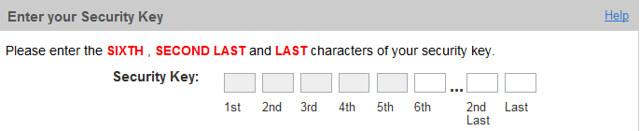
WTF were they thinking? Are you playing games with your user? Are you trying to revive the business of the human teller? If you don't have hidden fees for stepping into the hallowed buildings that house your branches, nobody would mind. Or perhaps, you've just hired a person with some ostentatious ideas of security to design this. That link for Help to the right might as well be labelled Get Me Out Of Here!.
Consider this APAR. An APAR is one of the many acronyms that you get for free when you sign up to swim in the IBM pool. It stands for Authorised Program Analysis Report (aka "yeah, whatever") and (reference) is "an IBM-supplied program that allows you to create a diskette or tape file that contain information from your system to help software service representatives to correct programming problems."
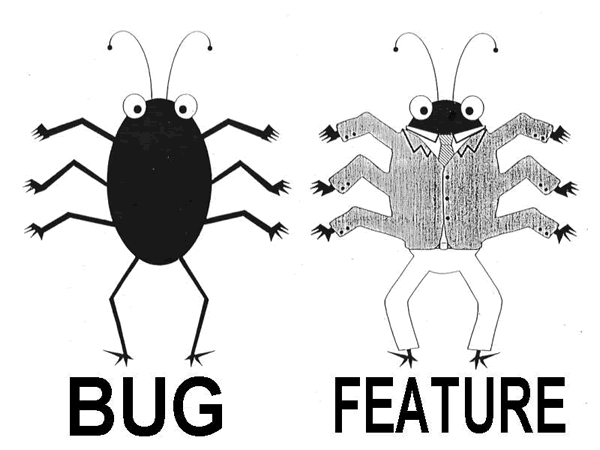
But I digress into the marsh of minutiae. This APAR has been classified as a Permanent restriction. Also known as a feature. (You remember that lovely cartoon, don't you?). In plain English, "we are not going to fix this, so suck up and deal with it. And, by the way, don't forget to send us that cheque for quarterly maintenance and premium support"
As if to assuage the wounded soul who had boldly dared to log this ticket, the conclusion reads After analysis of this APAR we have determined we will not fix this issue due to: low priority/severity. A priority decision has been made that this defect cannot be addressed without neglecting issues of higher importance. Thank you for your understanding. In other words, another three-finger salute while gleefully taking payment for another round of sadism.
Stephen King's fiction enjoys a large readership not just in the US but abroad and especially India. His forays have primarily been in horror and Indians love horror. He also manages to take interesting ideas, observations and characters and explore them in a rather simple welcoming style. Despite almost always working with a few genres, he manages to churn out books that are notches above the average bestseller.
Unfortunately, reviews of genre fiction in India still have miles to go before they reap. There are the unfortunately few reviews like this and then there are people who don't understand the works of Stephen King and foolishly dare to review them. It seems fit to begin my new year in this neighbourhood by ranting about a piece of fluff that, when all things are considered at Judgement Day, will be quite inconsequential. Yet, it is to griping about people and things that don't even deserve a modicum of attention that I am destined to devote my time.
The exhibit for the occasion is a review of Stephen King's recent novel 11/22/63 in the Deccan Herald by someone named Payel Dutta Chowdhury. If this public LinkedIn profile is the right one, the reviewer is a professor at Garden City College in Bangalore and also the head of the English department. This also makes a lot of what follows even more unpleasant. This is someone who should have known better.
We are off to a flying crash with the opening
The use of magnus opus is troubling. Does the reviewer wish to imply that King has been churning out great works for a while? There is no doubting that this is a work on a larger scale than perhaps anything that King has tried before, but have there been others?
Does anyone know any of the other rare juxtapositions of facts, fiction and much more? (I know only one: the coefficient of the linear).
The second sentence darkens the lentils even further
Let's pick the grammatical nit first. Any editor worth his or her salary would have fixed this sentence. As it stands now, A master of the science-fiction genre refers not to King (as it should have) but to his recent novel. Let's now look at a problem that's arguably a more important one. I wonder if anyone familiar with Stephen King's ouevre would call him a master of the science fiction genre. It's a perfunctory label that only suggests that the writer's knowledge of King's work might be limited to a subset comprising either his works like The Gunslinger and Firestarter or absolutely nothing at all.
What follows next is a complete synopsis in précis, which reduces King's novel to basic elements of the plot, stripped of everything that actually made the novel interesting. The synopsis also pays tribute to Taran Adarsh in its completeness. It also constitutes the majority of this review. That should tell you that if you were looking for an interesting examination of the novel, if you were looking for reasons to read this novel (or not), if you were looking for a useful point of view, this is the wrong county to be in. Unless a grammatically incomplete line like Definitely, an interesting and insightful read is enough for you (in which case, just scroll down to the bottom of the page, read that line and get on with your life). The synopsis owes a lot to the Wikipedia page for the book (search for "recently-divorced high school English teacher"), King's reason for abandoning the idea in 1971 and other bits about the background of the novel (search for "price of a pint of root beer").
This brings us to the rest of the bits in the review, which, thanks to that very popular search engine called Google, were clearly swiped without attribution from elsewhere. A few bits come from Janet Maslin's review in the New York Times: the opening (which means that I must redirect my criticism above to Ms. Maslin), the premise (search for "revisit and even revise"), the description of the book's cover (search for "happy and unscathed").
With all this plagiarism, one wonders why the number of pages of the novel according to this novel (850) is different from the actual number of pages (849; 842 pages for the actual novel starting from chapter 1 and 7 pages for King's afterword). When both Ms. Maslin and the Wikpedia page agree that 849 is the right number, why would someone invent a different number? If you add the extra pages between the hard front and back and subtract the two protective thicker sheets, you get 864, which matches the number listed on the book's official site. Since no official paperback edition appears to have been released yet, the plot, as they say, only thickens.
The seemingly original contributions only offer more evidence that the amateur writings on Rediff are not alone; consider this:
Something tells me that King's novel is likely to lose a few readers thanks to this review. I only hope that the book reviews in the Deccan Herald do not have a large bunch of faithful readers.
Meanwhile, let us mourn the fact that someone got paid for this sorry piece of plagiaristic piffle.
PS: I wish someone from the New York Times would fix the date in the title of Ms. Maslin's review; the date (and the title of the book) is 11/22/63 and not 11/23/63.

However, I am a member of the minority and so I often end up with folders and files whose names aspire to be sentences (or at least parts of speech like nouns, prepositions, pronouns and the occasional verb [To be DELETED: ugh!). Today was one of those days. I had a folder full of PDFs, each with a name of the form Last, First.pdf. I would have preferred a name like FirstLast.pdf. The easiest way to do this was with some shell-fu or Python-fu (with due apologies to the GIMP). I tossed a coin and chose Python. I fired up PythonWin and started working on fragments that would eventually unite into a single one-liner to rename them all (sorry JRR). I wasn't smart enough to reduce it all to one line (I needed the imports and I was not a lambda knight).
import fnmatch, os
# basedir is a string representing the full path to the folder
# containing the poor PDFs
for pdf in fnmatch.filter(os.listdir(basedir), '*.pdf'):
new_name = ".".join(["".join(reversed(pdf.split('.')[0].split(', '))),
pdf.split('.')[1]])
os.rename(os.path.join(basedir, pdf), os.path.join(basedir, new_name))
Of cours,e I could have skipped using new_name completely:
import fnmatch, os
# basedir is a string representing the full path to the folder
# containing the poor PDFs
for pdf in fnmatch.filter(os.listdir(basedir), '*.pdf'):
os.rename(os.path.join(basedir, pdf),
os.path.join(basedir,
".".join(["".join(reversed(pdf.split('.')[0].split(', '))),
pdf.split('.')[1]])))
I think this might be the first time I used reversed(), but since it was a relatively recent addition (2.4 to be precise), I didn't feel too bad. Had I written this code before 2.4 had been released, I would have been forced to use reverse(): this also reversed the list, but did it in place and did not return the list; I would be forced to reverse the list first and then send it onto the join conveyor belt.
I also like how just adding brackets as bookends to items separated by commas, I get a list:
["".join(reversed(pdf.split('.')[0].split(', '))), pdf.split('.')[1]]
Mission accomplished. With some learning to boot. Not bad for a few minutes of work.
ojdbc5.jar and ojdbc6.jar.
Oracle tells you that ojdbc5.jar contains Classes for use with JDK 1.5. It contains the JDBC driver classes, except classes for NLS support in Oracle Object and Collection types and that ojdbc6.jar contains Classes for use with JDK 1.6. It contains the JDBC driver classes except classes for NLS support in Oracle Object and Collection types.
Take a class oracle/core/lmx/CoreException.class from each JAR, send it to file and you are not surprised with what you see:
(for oracle/core/lmx/CoreException.class from ojdbc5.jar): compiled Java class data, version 49.0 (Java 1.5) (for oracle/core/lmx/CoreException.class from ojdbc6.jar): compiled Java class data, version 50.0 (Java 1.6)
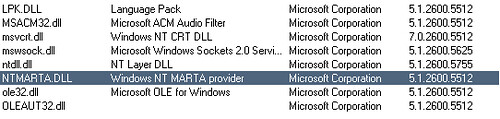
Open the manifest of each JAR, however, and you see something interesting. The value of Created-By is the same in both JARs: 1.5.0_30-b03 (Sun Microsystems Inc.). How can a JDK 1.5 compiler know about JDK 1.6? Surely, this has to be something lurking in the scripts that needs to be fixed. It also wouldn't hurt to use a newer version of Ant (the value of Ant-Version) is Apache Ant 1.6.5 (the latest version is 1.8.2).
But I digress. I just finished reading an old hardbound copy of The R Document that I had picked up at a book sale organised by the public library. I was surprised at how fast I had finished it, but I was also relieved that it was not as painful as The Pigeon Project. The latter also tried to be a travelogue of Venice while we follow Tim Jordan in his attempt to save the formula for yet another elixir for youth. The biggest problem with the novel is that it isn't hard to predict the end and once you have done that all the suspenseful goings-on are just not suspenseful anymore.
The R Document, on the other hand, is a conventional thriller with the appropriate twist and surprise tossed in ever so often to season the proceedings. The novel follows Christopher Collins, the Attorney General of the United States, as he races against time to find out more about a mysterious "R Document" that seems to be a rather nasty side of the 35th amendment (which is a new amendment to the Constitution that allows the powers-that-be to suspend the Bill of Rights during times of national emergency). Once again, you can predict how this is all going to end. But this time, Wallace does not try to do more than deliver a standard thriller while showing off his research on politics and the constitution of the United States. There is no travelogue. There is no sequitur into unrelated sub-plots. This is the stuff of efficient black and white low-budget thrillers (and in the hands of a competent journeyman that black and white thriller would have been a far better piece of art than this piece of pulp). Since this is fiction for the masses, it would be unfair to expect complex characters or a genuine sense of intrigue and dread. This novel was written 45 years ago, but could easily have been written today about the Patriot Act of 2001. That topical stroke of luck makes The R Document more memorable (is that too strong a word?) than The Pigeon Project.
Regardless of such trivial quibbles, Bappi seems like the perfect person to warble this lusty duet with Shreya Ghoshal (who would have thought she'd pick a song like this instead of a strain of romantic yearning?). The song starts off feeling like an uncensored alter ego of R. D. Burman's chunarii sambhaal gorii before shifting into a nostalgic paean to the disco-laced 80s dominated by Bappi-da. Bappi gets to pay tribute to himself in (as far as I can remember) his second song for Vishal-Shekhar. He couldn't have asked for more.
I was pleasantly surprised and very impressed when I visited the Anna Centenary Library. I love the public library system in the US and always wished that something similar had existed in India (the British Library in Pune was the closest, but it offered only paid subscriptions and a catalogue mostly limited to the United Kingdom). For the first time, I saw hope as I explored the floors of the library.
And then Amma's crusade against all the edifices erected by her predecessor headed to Kotturpuram. The library was Amma's next salvo against Anna. Once again she wanted a hospital in its place. So far, such a hospital has not been set up in India. By establishing a super speciality hospital dedicated to interests of children, it is certain that Tamil Nadu would [sic] emerge as the top ranking State in protecting the interests of children, she was quoted as saying.
And what happens to the contents of the library? Amma plans to move them to the proposed Integrated Knowledge Park on the DPI (Directorate of Public Instruction) campus in Nungambakkam citing some reasons for this being a very ideal place. Nobody said anything about whether her government plans to be fair with space. I find it hard to believe that they're going to match square foot for square foot and floor for floor. Books in a bookshelf are likely to end up packed in boxes.
But I exaggerate. I shouldn't be cavilling about this. After all, a hospital is a noble thing to have (I trust that the hospital will be generous to all children in need of medical assistance). But so is a library. Surely there are condemned structures around town that can be torn down and replaced with her hospital. Surely there are other locations in the metropolis that deserve a facelift for the better.
But Amma must have this building.
Not because its location works better for a hospital than for a library.
Not because its interior design and layout are more conducive for hospital beds, labs and offices than for bookshelves, reading desks and couches.
But because Anna made it.
How people can elect such bickering people into office is beyond me.
Mercifully, the Madras High Court has restrained the State government from moving the library. Perhaps good sense will prevail and I'll still expect to see books on shelves and see people sitting at the desks reading and studying instead of dealing with the smell of disinfectant.
(the title of this post paraphrases the opening line of Ray Bradbury's most famous book, which seems quite appropriate for the occasion)
If you're going to read this, don't bother
Define irony. Irony is a bunch of idiots singing a song on a plane made famous by a band that died in a plane crash
Why am I soft in the middle
The rest of my life is so hard
I like to remember things my own way ... How I remembered them. Not necessarily the way they happened.
Be warned in time, James, and remain, as I do, incomprehensible: to be great is to be misunderstood