Thursday, February 12, 2009

vishal's next?: and now it's aishwarya rai (bachchan)

In 2002, Vishal had adapted a novel called Pas de Quatre by Australian writer I.A.R. Wylie into a screenplay called Timbuktu (or Timbuctoo according to Stephen Alter's book). His choice for the leads were Vivek (now Viveik, if you will) and Aishwarya Rai with Pankaj Kapur in a "key role." Vishal acquired the filming rights, Abbas Tyrewala worked on the screenplay; Pankaj Kapoor reportedly noted some discrepancies; Robin Bhatt was roped in for a rewrite, but things failed to proceed beyond this. Kyun!... Ho Gaya Na killed the love for the real-life love birds at the box office, Vishal moved on to make The Blue Umbrella, Vivek Oberoi returned to strum Wonder in Omkara and Ms. Rai became a Bachchan.

Now, about 7 years later (aka saat saal baad), Rai-Bachchan and Vishal seem all set to team up on what appears to be the same project. Mrs. Rai-Bachchan notes that they had wanted to work with each other "ever since he was the music composer on a project that got shelved." One wonders if this was Hum Panchi Ek Daal Ke starring Sunil Shetty and Ashutosh Rana (in which Vishal reportedly gave KK his first solo song).

There's more about what happened all those years ago here.


[Cross-posted on the Vishal Bhardwaj blog]

Friday, February 06, 2009

lingua typo grammatostrophe

In which we start by noting a more eloquent reaction from JR to the abominable twisted usage of revert. I haven't seen anyone but the denizens of meraa bhaarat mahaan bandying this niggling neologism. If I am wrong, please let me know.

We now move on a few examples of typographical hilarity resulting from the confusion of homophones spelled differently. How else can you explain I think this works for the soul ... to attach soul to the shoe? The speaker is clearly not alluding to moccasins from Motown; the word was sole, but we can't do much with such examples in the English language, can wee?

And there was the IT guy who had picked up a much-abused phrase derived from the contraction of synchronisation and decided to send out an email asking people to be in sink. Dirty dishes done dirt cheap?

Matters of homophonous abuse hardly get better than using ideal when you meant to write idle (drivel's workshop?)

We now consider countable information, a stellar example of which is the use the indefinite article with news (along with adjectival qualifiers). Surely you've heard This is a really good news (I have unsettling memories of having heard this as the token line of English in an otherwise mostly Marathi film)! And this is a really good news? It's a really bad thing.

A cousin of this artifact is countable assistance, best represented by I want one (small) help from you in Indian offices. Perhaps it's time stores sold measuring cups for assistance and aid. It'd add an ounce or two of value to all the favours done.

Neologisms deserve their own post, but I will leave you with another egregious concoction in the kitchen of rabid redundancy: end goal.

Tuesday, February 03, 2009

working from Hell

How would you like to work in an office sporting all of the following kinds of people:

  • X takes all calls in his cubicle on the speaker phone (headsets are available, but X probably is a caveman or a luddite or has strange concerns for his delicate ears)

  • A takes a call on speaker phone, hits the Mute button and then abandons his cubicle for several minutes while the call continues for everyone around to hear

  • B hits the keys on her phone to dial an extension before picking up the handset thus giving you a cheap reproduction of the alien signal in Close Encounters of the Third Kind

  • C is one of many who love who do not believe in conference rooms and choose to have animated discussions in aisles and near cubicles

  • D comes from a tribe of people who lived far apart from one another, never understand why the word "whisper" existed in the English language and always carried out conversations as if they were making ISD calls in the 80s

  • E probably comes from a family hard of hearing, which explains why he/she believes in configuring annoying ringtones on his/her cellphone to the highest possible volume; to make sure it's effective, E occasionally remains away from his/her desk, leaving the cellphone behind on the table (the experiment is always a failure, because everyone except E hears the phone)

Saturday, January 31, 2009

Sarkar Raj: SIGKILL, baby

If Sarkar had RGV blending ideas from the first two editions of Coppola's Mafia trilogy, Sarkar Raj represents an impassioned gung-ho exploration of a motif in The Godfather Part III that a friend had noted. There's a scene in the film that seems to have been the source of this friend's interpretation: there's a meeting of the bosses in an Atlantic City hotel room that takes a violent turn when machine gun fire from a helicopter litters the conference room. It's a massacre. My friend contended that the third edition seemed to punish any time and consideration invested in any characters introduced or revisited in the film. In simple words, "Let me introduce a new character; let me get you interested in the character; now that you're interested, let me bump that character off." This motif was explored in greater clarity and rather unsubtle delight in X3: The Final Stand. You were introduced to a host of new mutants, most of which didn't make it past the final conflict (the final stand, duh). You also had to bid farewell to some characters who had gained your attention over the first two editions in the series.

It is this horse that RGV rides into the ground and he does it with aplomb. By now, one has grown accustomed to his patent-pending MeanderCam, the canted camera angles (straight shots seem limited to indoor sequences) and the loud background score. The campy expressionism of villainy is given a shot in the arm with the rest of the usual suspects (Sayaji Shinde, Upendra Limaye (who spends time singing Hindi film ditties and correcting the pronunication -- "woraa not voraa" -- of his character's last name) and Govind Namdeo. Aside from Ms. World-now-Bachchan, the most prominent addition to the roster is Dilip Prabhawalkar. No time is spent in attempting to get the audience to invest in any character. As with his existing ouevre, this film digs into the sordid bag of real life for some shards of inspiration (Enron, in this case, but just barely). A lot of what happens is strictly a setup of dominos stacked for the final cascade. RGV even returns to The Godfather for one of several turning points in the film. The good get corrupted, the innocent get eliminated, the upright end up being downright heinous. Never showing us the face of a contract shooter must rank as an under-sung achievement. The spoken word is sparse and uttered with grave seriousness. Cool is underplayed even for great punchlines like jaan lenaa jurm hai; sahii samay par jaan lenaa ... raajaniiti. Grief fuels retribution and it all ends with ek chaay laao, perhaps the most outstanding final line in Bollywood cinema for a long time to come.

It would be interesting to see another sequel emerge from the rubble of this pogrom. That possibility notwithstanding, the sequel's more fun if you watch it not as a piece of moderately serious gangster cinema, but for what it's worth: a darkly funny parody of serious gangster cinema and everything that Sarkar took the pain to found.

Thursday, January 22, 2009

they actually call them bugs

Or DOGs (Digital On-screen Graphic) in the UK. David Bordwell has a fascinating post on diegetic bugs. These, you must agree, are pretty cool. For those of us, who also foam at the mouth at the words "formatted to fit your screen," however, the TV channel logos, tickers and the auto-fellating ego stamps of DVD manufacturers (especially those churning out DVDs of Indian films) represent something that's anything but. The likes of Eros, Shemaroo, Ultra, Time, Sony/BMG, Adlabs (oh, how can I forget them?) are worthy of the most heinous punishment possible for every time the logo fades in during the credits or signalling the beginning of a song (and dance, if applicable) interlude. It's hopeless to argue the importance of the integrity of a cinematic work (whatever be its perceived value -- for the purposes of this rant, Race is just as good as L'avventura) with these DVD-burning baboons.

I for one would really relish spraying the nethers of each participant from each of these companies with ice cold water while they stand, tied against posts like Thaakur baladev si.nh in Sholay, with the Forrest Gump feather running an infinite loop around their arms, brushing their armpits ah-so delicately as they are forced to listen to a mix tape of Lata Mangeshkar's youthful songs from the 21st century. After a suitable interval, I propose to spank their tender derierres with electric fly swatters as they are forced to watch (with eyes taped wide like those of Alex the Clockwork Orange) a mash-up of all the scenes of Alok Nath from all the Rajshri films he ever starred in.

The floor is now open for bids.

Sunday, January 18, 2009

soap for the censors

[link courtesy: Siddhartha]

The Bhatts are back and with swords drawn in a battle with the censors. All this is for Mohit "original" Suri's next film Raaz: The Mystery Continues (aka Raaz 2). The issues at hand are expletives uttered by Kangana Ranaut (who cares? even with an A certificate, the censor board insists that all cussing be replaced by shards of silence) and her nude scene. Any promise of skin in Bollywood is empty and is only a device used in marketing to tantalise the gullible secretly horny audience. Red: The Dark Side (directed by Vikram Bhatt), Girlfriend and Paap (directed by Pooja Bhatt) are just a few examples of such deception. The promise of cleavage remained unfulfilled. And yet audiences fail to learn. It's a Pavlovian success. This brings us to the latest source of brouhaha. Do you really expect me to believe that you're going to pull off a nude scene of substance in a film starring the World's most depressing peon and an overrated femme known for playing personalities with lives laced with despair, grief and trauma? But our interest in the matter lies in the quotes, the priceless utterances that grace such occasions -- utterances citing moral victories, victories of creative expression and evidence of silly arguments:


If someone is in a bath tub, she has to be nude. You don't bathe with your clothes on, right? Moreover, when you would see the film, you would realise that Kangna's nude scene has also a lot to do with audience's imagination.

Ignore, if you can, the inexplicable Indian tendency to use would instead of will. Concentrate instead on the argument made. The defendants seem to have decided that if a film features someone taking a bath in a bath tub, it behooves the camera to present a complete tour of that person's anatomy. What ever happened to the power of the suggested? What ever happened to the legacy of Cat People? Does anyone really care?

Apparently this film was inspired by a Kabir couplet. That's definitely a record. Now it's time to find out what the real source was.

Incidentally, the scariest part of this film is that it features Ranaut's current beau, Shekhar Suman's son Adhyayan Suman; this might well be another Love Story 2050 (unless the Baweja/Chopra thing was a marketing ploy).

Saturday, January 17, 2009

nasheman nation and egregious tautology

Typos are such a great source of humour once you get past gnashing your teeth and uttering unkind curses dedicated to the writer. Consider two samples, documenation and defination. The former seems a victim of the syndrome of the disenfranchised letter. The latter is one of the products of an inability to get out of school with the right spelling. In either case, one feels like paraphrasing the late Pancham: ye documenation/defination kaun saa desh hai bhaaii?

The pervasive progress of redundancy in spoken and written English is astounding. Blame it on crapspeak (also known as office jargon, corporate-speak). Blame it on people who don't let the speakers and writers of vacuous phrases just how painful it is to read what they have written or to listen to their bombastic nothingness. Being on the same page, going forward (shudder!), having a full plate, keeping something on your radar, having the bandwidth (wince!), hitting the ground running. All these are obvious stinkers. But what of the minor subtle killers like fellow colleagues (are there any of another kind?), serious danger (talk about undermining a perfectly capable word), mutual cooperation, original source (this packet actually came here from there), local resident (remember the days of 1040NRs?), continue on (the roof? the floor?), chief protagonist, general public (with specific privates, no doubt), on a regular/daily/weekly/monthly basis (what happened to "regularly/every day/week/month"?)? Why not just meet instead of meeting up? Why not just visit instead of visiting with?

Friday, January 16, 2009

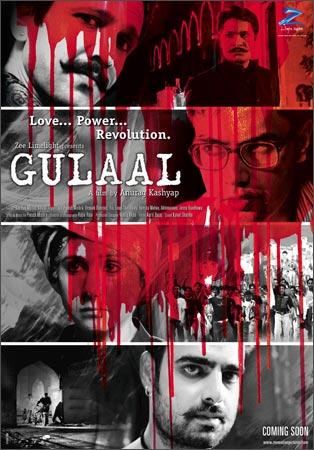
Gulaal gets a release date

poster courtesy: rediff.com.

and a poster.

The date, March 11, will most likely take advantage of the festival of colours, although this clearly isn't a film that will sit too comfortably with Khal-Naikaa or Silsila. Those who'd like to know more about what was meant to the smokin' Jesse Randhawa's first Hindi film need look no further than AK's posts on PFC. The immersion into the adventurous aural confections of Dev.D has just begun; one awaits the immensely talented Piyush Mishra's first offering as a music director. 2009 looks like Anurag Kashyap's year. जी जी जी जी जी.

Sunday, January 11, 2009

announcing: RMIM Puraskaar 2008

That's the second time in a row that I have delayed my post. Time to go listen to tandoori nights. Vinay is back with the third edition of RMIM Puraskaar. Voting closes tentatively by the middle of this month (not many days left).

The announcement's also posted on the giitaayan blog.

Saturday, January 10, 2009

hop and skip

It all started with a Velocity template error on a page in my bookmarks that I decided to visit again. The Wayback Machine couldn't help out of respect for and adherence to the robots exclusion protocol. Googling got me to DZone and thence to an old InfoQ article about changes in the Java Collections API made in Mustang. Two things caught my eye: "skip lists" and "William Pugh"; The former was a data structure that a colleague in one of my previous jobs had introduced me to (not that I learnt more about this data structure later, but I was quite fascinated with what I had heard). The latter is the father of one of my favourite software code quality tools, FindBugs. As it turned out, William Pugh invented skip lists. You would think that I would've got wind of this at some point given that Pugh was not an unknown name thanks to the tool. Yet, today was when the dots presented themselves to me, connected in glee. The final surprise lay in store for me over at the inevitable Wikipedia page for skip lists. The second reference listed on the page is a paper, whose co-author is a good friend.

Then again, not all coincidences are meaningful.

nominal irony

Satyam is such a nice name for the firm that represents India's contribution to the kind of newsmaking last dominated by the hubris of Enron. I really wish someone would write something about Satyam's firm in the vein of Malcolm Gladwell's article in The New Yorker titled Open Secrets. As with most such fallouts consequent of corporate socialism and executive greed, the employees down below earning pay for putting in hours of work are going to suffer most. The timing's rotten too. Those in favour of reeling in the lines hurled out to cheap herds of code monkeys across the seas have a great exhibit. The other biggies in Indian IT service providers are probably rallying to DEFCON 1 with each passing day fearing that a pair of smart eyes might just notice the creativity in their accounting (should such creativity exist). Indian filmmakers, meanwhile, are probably balancing their stack of news reports and oft-played scratched DVDs of Wall Street, Antitrust and Enron: The Smartest Guys in the Room as they attempt to find ways to squeeze an item song featuring Shilpa Shetty and Amrita Rao making out in family-friendly fashion in the Gobi Desert into a Mahesh Babu starrer based on the whole deal. Ram Gopal Varma could play Ramalinga Raju, but it could add an edge of the surreal and the darkly comic to a film that, minus the song and dance and weepy drama and synthesised sympathetic violin motifs, probably aimed to offer a "serious" family entertainer. Oh! We could even call his sons Shivam and Sundaram. We can then all join in to sing along with a remixed version of that Lata classic laced with transitivity:


ईश्वर सत्य है
सत्य ही शिव है
शिव ही सुंदर है

And hence, ईश्वर is शिव and also सुंदर. Quadrupled equality or triple beauty. Take your pick.

Wednesday, December 31, 2008

shut up and blam

At the risk of alarming people, I have to admit that my heart goes out to James Joseph Cialella Jr.

If you're like me, your blood curdles when you're sitting in the movie theatre and hear that annoying cellphone ring or that wretched form of human life sitting nearby jabbering away. If you're like me, you might occasionally politely let the source of this free disturbance know what pain he/she is inflicting on you. If you're like me and this is one of those desii theatres, you don't even mince words and even mix in simian growls and cynical asides. But even I would never do what I admire Mr. Cialella Jr. for doing. When a father and son nearby were talking away while Fincher's The Curious Case of Benjamin Button was playing, Mr. Cialella Jr., having tried the verbal approach and even the rather subtle move of throwing popcorn at the offspring, pulled out a gun and shot the father in the arm. He then returned to watch the movie until the cops came to arrest him.

It's extreme. I would never be able to do this. And yet, I'm cheering away.

Monday, December 29, 2008

and i wonder

How many different words have been used by those that name all the strip malls that inundate the American geography? I've seen pointes, places, plazas, villages and squares. I'm sure there are more I don't remember and more I haven't seen.

We all remember Sssshhh... (aka S4H3), don't we? One wonders if his appropriation of Jigar Muradabadi's couplet sabhii a.ndaaz-e-husn pyaare / ham magar saadagii ke maare for the song sapane is the only example of the Bollywood lyrical machinery lifting from this poet.

How many people noticed that Anu Malik was lifting his own stuff when he did the title song for Main Hoon Na? Try dha.Dakataa hai dil from Baazi.

Was I the only one who thought of Shankar-Ehsaan-Loy's be-imaan mohabbat from Ek Aur Ek Gyarah (one of those rewarding songs that seems devoid of any of the SEL trademarks that seem to pepper most of their work these days) when A. R. Rahman's aziim-o-shaan from Jodhaa Akbar started playing?

Didn't anybody notice how Pritam smartly took the a.ntaraa of aage bhii jaane na tuu from Waqt, sped it up, added his trademark wall of synthesised bricks and tossed it out as the a.ntaraa for the Usha Uthup song All Night Long in Dhol?

Did you know that If you navigated to the 00:13:38 mark in your copy of Emmanuelle in Space, you can hear the beat loop that underscores maa.Ngataa hai kyaa in Rangeela?

Did you spot Jatin-Lalit reusing the melody of the a.ntaraa of aa.Nkho.n me.n kyaa in 1996's Khamoshi: The Musical two years later for the second interlude of jab kisii kii taraf dil in Pyar To Hona Hi Tha?

Don't you think it's just a coincidence that an earnest riff played by the string section the second interlude in Anu Malik's teraa cheharaa mujhe from Aapas Ki Baat finds a sibling in the opening of the a.ntaraas in Pritam's lamhaa lamhaa from Gangster?

Sunday, December 28, 2008

extracts from the reading list

I have to toss a sop to coincidence when the phrase tout court shows up in two books that I picked up at the public library on Christmas Eve. I'm sure the phrase is not uncommon, but I have to confess that I haven't seen (or noticed) it before. As a tribute to the coincidence, here are some extracts from each book.

The first is the third book in Donald Spoto's series on Alfred Hitchcock. Spoto's name and work is known to any serious Hitchcock fan; A well-turned copy of The Dark Side of Genius: The Life of Alfred Hitchcock, the second volume in the series, lies in my bookshelf (gathering some dust, I must regretfully add). Employing a pun, Spoto calls the new book Spellbound by Beauty and it covers, as is evident from the title, the Master's obsession with his leading ladies (and especially blondes). Spoto has been accused of starting to paint a rather uncomplimentary picture of Hitchcock as a person, starting with his second book. This third book, as the preface indicates, seems to promise more material that is bound to offend those that hold Hitchcock in high regard, as a creative genius without blemish. But, as Spoto also points out, genius has never been free of a life peppered with hurdles, sorrow, hardship and personality flaws:


Writing or speaking anything other than the highest praise or failing to promote the most affectionate encomia for so august an icon as Alfred Hitchcock has become, in the eyes of many, equivalent to cultural sacrilege. But the craft of biography requires that the shadow side of subjects be set forth and comprehended - otherwise, their humanity is diminished, their pain minimised, and those they hurt are ignored. Any appreciation of Hitchcock's art and life must take into account the enormity of his psychological, physical and social suffering, as well as that which he (perhaps unintentionally) caused others. From his suffering came the obsessively recurring themes and the constant sense of dread with which he continues to astonish, entertain and enlighten.

The other bit comes from the wonderful introduction by Anthony Burgess to the compilation The Best Short Stories of J. G. Ballard:


Ballard considers that the kind of limitation that most contemporary fiction accepts is immoral, a shameful consequence of the rise of the bourgeois novel. Language exists less to record the actual than to liberate the imagination. To go forward, as Ballard does, is also to go back -- scientific apocalypse and pre-scientific myth meet in the same creative region, where the great bourgeois novelists of tradition would not feel at home.

The complete text of the introduction is available in the Google Books preview of the book.

The final extract (did I say two? I lied) comes from Emmanuel Carrère's book I Am Alive and You Are Dead: A Journey in the Mind of Philip K. Dick. It's a succinct description of what happens when a cult figure acquires mainstream acceptance and recognition:


Given the uniform Vintage editions of his complete works and the many articles about Dick that have appeared in both academic and popular journals, his fans must feel a little like the early Christians did when their faith was officially adopted by the Roman Empire: triumphant, of course, but also slightly nostalgic for the days when they lived in the catacombs. The Happy Few cease to be happy when they are no longer few. Dick has become part of the mainstream.

Wednesday, December 24, 2008

a farewell to YACCS

The precious few visitors that this ego-fondling portal of extremely biased rants and raves may have noticed the results of a forced rhytidectomy. As I attempt to restore elements from the old platter, you, dear visitor, may have noticed that the comments that you may have left/noticed/read/responded to in the past are gone. Kaput. Poof! The kind of thing Griffin was known for. Here's what happened.

It all started in 2002, when YT started blogging with Blogger. It was free, easy, reasonably popular, but lacked certain features that today's bloggers take for granted. One of these was support for comments on posts (yeah, duh!). Google's acquisition of Blogger didn't help matters too much. Comments arrived, along with some other features, in 2004. So what does a hapless blogger do till then? Try a third-party offering. Haloscan and YACCS were the leading offerings then. A mental coin was flipped and I chose the latter. It had its problems, but then so did Haloscan. Procastination and the lack of any easy way to migrate comments from YACCS meant that I never adopted the new commenting system in post-Google Blogger.

The first cog in the merry wheel came in 2006 with a big redesign featuring a new templating system, a more interactive editing experience and more reliability. The only hitch was that YACCS didn't support this new system yet. So I stayed with YACCS, but made a mental note that I'd have to try and find a way to migrate the comments from YACCS to the Blogger system -- either with some convenient piece of software out there or by churning out some code myself.

The final blow fell recently on August 19, 2008, with the announcement that the YACCS service would be discontinued starting December 23, 2008; here's the text of the announcement reproduced from the main YACCS page:


YACCS will discontinue service on Dec 23, 2008

YACCS will discontinue its service on December 23, 2008. After this date, you will no longer be able to access comments, either on your site or through the YACCS homepage. Please download/archive your comments before this date. Thanks to all the supporters, translators and bloggers who have supported YACCS over the past seven years.

This left me no choice but to move to Blogger's commenting system. I went all in and adopted the new templating system as well. As I still continue to restore pieces from the original portal, I know that I'll have to write some code using the GData Blogger API. The good thing about YACCS is that it allowed me to export my comments in CAIF. That's the Comment Archiving and Interchange Format, something that Marcus Campbell came up with.

Thus I bid adieu to Hossein Sharifi's creation that has served this blog well for what few comments it managed to invite.
Saturday, December 20, 2008

was Rock On! meant to Bollywood's first rock movie set in the future?!

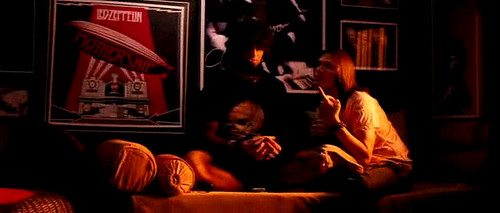
There's a moment in Abhishek Kapoor's directorial début Rock On!, as the title song plays in the background, when the camera pans across a set of posters adorning the wall.
the mothership trips time

Starting from the obligatory Che Guevara to a handful of photographs of John Lennon scattered about to one of The Beatles, one of Guns N Roses, a Rolling Stones poster sporting John Pasche's famous lips logo on a jean pocket and then, finally, Shepard Fairey's cover for the 2007 Led Zeppelin compilation Mothership. Whoa! Hit pause please. A few bits of dialogue in the film tell us that 10 years have passed since the band performed last for the contest. That camera pan was part of the flashback. This means that the present (featuring our former band members going through life like it was an endless novocaine trip) takes place in 2017 at the very least. It's nice to see that the film didn't have a dystopian view of Indian rock. Rock on!

Tuesday, December 16, 2008

trailer plug: DEV.D

This post was long overdue. For those who haven't seen it yet, may I point to the theatrical trailer of Anurag Kashyap's forthcoming film Dev.D, a contemporary take on the Sarat Chandra Chatterjee classic based on an idea by Abhay Deol. The trailer offers a quick trip (no pun intended) into a daunting, intriguing world of myriad colours and sounds (try combining a street dance party brass band and some angry rock along with a cool hook called emotional [pronounced: e-mo-san-al] atyaachaar) fuelled by addiction and the quest for love in its many twisted forms.

Elsewhere, there's a tame poster along with a more adventurous one (courtesy: PFC).

Amit Trivedi, who handled the excellent soundtrack of Aamir promises another exciting mixed bag for this film:


We have 15 songs for Dev D. All the songs will be played in the background. There are four lyricists.
[...]
It has world music, Rajashtani folk, head-banging rock, street band baaja, an Awadhi song, Punjabi song and 1980's[sic] Euro-pop song.

As that wasn't enough, try appearances by the dance trio The Twilight Players in the film.

update: [december 18, 2008]: The official website boasts more of the variegated palette along with NSFW elements (you thought they were joking about "Lustline," didn't you?). The Tamil dirty talk is especially recommended for chortles. It's bandwidth hungry though and takes its time to load, so make sure you have a tank of patience before you click through the phantasmagoria.

Monday, December 15, 2008

the lord is my business

[february 02, 2008]

The first 20 minutes or so of Paul Thomas Anderson's There Will Be Blood (after just the film's title as far as opening credits go) play out like a silent movie lovingly filmed to exploit the rich possibilities of widescreen until the silence is shattered with a Good Evening from Daniel Plainview right before the scene introducing us to him and his audience. Anderson eschews intensified continuity (a term due to David Bordwell), a technique rampant in Hollywood today featuring enthusiastically edited frames devoid of much information (Bollywood has probably taken this several miles further by presenting caravans of meaningless frames). Instead he sticks with patient long takes and a relaxed approach to a narrative embellished by a powerful score from Radiohead guitarist Jonny Greenwood. The score, which employs real instruments, is effectively eerie, reminiscent of the haunting motifs of Bernard Herrmann and the work of György Ligeti. All this only emphasises a towering consuming performance by Daniel Day-Lewis as the towering satanic Daniel Plainview embodying the American spirit while giving us a character unpleasant, unlikeable and compelling. I enjoyed watching the uneasy (unholy?) alliance between commerce (Plainview) and religion (the charismatic preacher Eli Sunday) as much as I did the measured steady pace of the film. The final act, however, has me in a pinch. I was impressed with its audacity, but I also felt cheated as the end credits rolled out like those in a silent movie. I just hope there was something I missed, something that a second viewing at some point will help me understand. There's no denying, however, the power of the film with all its warts and confounding elements.

Saturday, December 13, 2008

dibakar banerjee speaks and regales

PFC notches another big fat feather in its cap with a no-holds-barred conversation with Dibakar Banerjee, who scored with Khosla Ka Ghosla and whose bold second effort Oye Lucky! Lucky Oye! managed to survive despite the unfortunate timing of Bombay's terror weekend. This is strictly NSFW (you get Delhi-style cussing, comparisons between precisely measured filmmaking and porn flicks among other things) but it's worth every minute. And there's a lot of praise for .

Thursday, December 11, 2008

whom were they apologising to?

[cross-posted on the Passion For Cinema blog]


I wasn't alone in wondering why jalate hai.n from Onir's Sorry Bhai owed something to ballo from Rabbi Shergill's Avengi Ja Nahin. It isn't surprising, really, when you notice that Gaurav Dayal, the music director for Onir's flick is credited as the music programmer and producer for ballo on Rabbi's album. Rabbi sued, but unfortunately the courts didn't heed the wisdom in the Krazzy/Sampath case. The Delhi High Court put a stay on the film forcing the release date to move past November 28, 2008, but eventually caved in and lifted the stay. The observations made justifying the court's belief that there wasn't enough water in Rabbi's claim to bathe the horse of plagiarism are worth a shipment of guano:


We are of the view that the main constituent of the song is the melody and some similarity in the rhythm of the accompanying acoustic guitar can't be sufficient to infer that the music director has plagiarized Shergill's song. In any case, even the lyrics are completely different. So, we are, prima facie, of the opinion that the movie song is not a reproduction

Perfect. The dimwits seemed to have chosen to ignore the similarity in the melody. Also, did anyone listen to the lyrics of both songs? Methinks there's more evidence of a filch there (if anyone cares). Here's more:


[T]he division bench judges also heard the song in the chamber to conclude that the only similarity between the two songs Jalte Hain from the movie and Ballo from Shergill's album was "in the use of guitar". This apart, HC said, "there is some difference in the use of accompanying sounds, comprising other instruments."

So much for being qualified. One hopes that, despite the Supreme Court's refusal to do anything useful in this matter for now, the second RS joins the first RS in finding justice.

 
Creative Commons License
This work is licensed under a Creative Commons Attribution-NonCommercial-NoDerivs 3.0 Unported License.