Thursday, February 26, 2009

deux and deux

Yours truly is pleased and tickled to announce with geminiform glee that the guess about the second singer on the track heard in Kaminey's trailer has paid off. The singer is indeed Vishal Dadlani. The Vishal/Vishal collaboration is a creative echo of the doubles (Charlie and Guddu) in the film. Reportedly, Vishal Bhardwaj had joined Sukhwinder Singh after kash lagaa (No Smoking) to belt out the track, but convinced Vishal Dadlani to sing the final version. This of course makes me pine to hear the original cut with the director's voice, especially considering Vishal Dadlani's comments about the track (even if they are probably the kind of diplomatic comments people are inclined to make):


Apparently, the song was already recorded and Vishal [Dadlani] was sent across the CD to hear it out once. So impressed was Vishal with the voice in the song that he instantly called up Vishal Bhardwaj and enquired about the singer.

"To my utter surprise, I was informed that Vishal Bhardwaj had himself sung the song. He had done such a brilliant job that I tried persuading him to retain the voice for the final cut as well. However, he wasn't willing to do so and wanted another voice for the song. I am happy that he considered me for the song"

The not-so-Faustian pact signed by the two springs the promise of Vishal (Bhardwaj) singing for Vishal (-Shekhar). Put your hands up in the air now!

Squeeze the day; crack the piggy bank. Now if only some news item would talk about the lyricist.

Sunday, February 22, 2009

kaminey: the firft glimpfe

At leaft we now know the official pofter fpelling: Kaminey (the trailing 'y' raifef the iTranf error count, unfortunately). Fahid Kapur lookf interefting (and alfo lookf like FRK in the dark fcenef) and the brief glimpfe of Priyanka Chopra (who reportedly playf a Maharaftrian [gulp!]) ifn't grating.

The cutf are furiouf and the backing track if awefome. One fenfef the prefence of the big G what with talkf of dil nicho.De.n and raat kii maTakii to.De.n; if it ifn't the big G but fomeone like Munna Dhiman doing a big G, thif will mark the firft time that VB will direct without him (and would be a grotefque difappointment). I recognifed Fukhwinder Fingh'f voice, but I'm not fure about the other one; by the time the fong got to paife kaa khel I fuddenly ftarted thinking of Vifal Dadlani. If thif turnf out to be true, it would reprefent fomething cool (The headlinef fcream: Vifal fingf for Vifal!!!). The beat if bound to bring back memorief of Mifirlou (ufed fo memorably in Pulp Fiction), which alfo bringf uf to Vifal D'f rendition of the title track of Caf, which alfo evoked memorief of the track and Tarantino'f flick. The race courfe got me thinking of The Killing.

The font reminded me of the font on the Vertigo pofter, but there'f another opening credit fequence that I juft can't remember. Bad déjà vu, no doubt.

Amole Gupte (he who wrote and almoft directed Taare Zameen Par) makef a big splafh (appearancef in Holi and Mirch Mafala notwithstanding) on the other fide of the camera and deliverf the priceleff line अरे फ को फ नहीं बोलेगा तो क्या ल बोलेगा?. That line would have foared through the roof had it included a cuff word -- if ever there waf a fuitable place for one, that waf it right there. Alaf, the deference to prudery in the nation ftill rulef the rooft even in thif decade.

I got the fenfe of a defire to capture natural light without the need to make thingf look gloffy. I don't know if that'f a quality of the film or juft the uploaded trailer.

I love the trailer. There'f minimal expofition and it definitely ticklef your curiofity. Fit! I now have to wait till the foundtrack comef out to calm my eager felf. Viva Vifal!

Thursday, February 19, 2009

the music of Billu Barber

While JR eloquently lavishes praise to the deserving outstanding soundtracks of Dev.D and Delhi 6, YT will revive the bags of wordy warble dedicated to soundtracks with a track list that marks a moderate return to form for Pritam, the Friar of Filch, who remained interesting with his "revisions" until he started sounding like assembly-line product. It seems quite fair to connect this to the presence of Gulzar (who first collaborated with Pritam on Just Married) on the soundtrack (well, at least part of it -- but more about that after a few measures).

The 15 tracks are really just 7 tracks, a reprise, a video edit and 6 remixes. The first track marajaaNii opens with a crescendo of triumphant brass, drums and strings that would not have sounded out of place on the outtakes of Muthu. Electronica sets in promptly after this before an energetic male chorus pan-tossed across the speakers. The booty-shaking beat almost distracts you from the surprising barrage of eloquence mouthed by Sukhwinder Singh. When was the last time you heard an item song where the lyrics drew your attention?


ठीक है ठीक ठीक सब कुछ ठीक है
पास है सब कुछ रब नज़दीक है

रब के हज़ूर में कसमें भी खा लीं
दुनिया की औनी-पौनी रसमें निभा लीं


Those last two lines got some people worried -- they thought hazuur was a (blasphemous) reference to the Prophet. One wonders why their sensors didn't kick in when the word floated by in bii.Dii. The meaning's plain to see. The rest of the song doesn't let up as Sunidhi Chauhan enters with a rejoinder. Everything mixes in Punjabi (which shouldn't be a surprise for those familiar with Gulzar's work) builds up to a chorus telling the world to go to hell (civilly, of course). The a.ntaraa offers more excursions into ridiculous rhyme and you can't help smile at जो सर में सोच आयेगी तो पाँव में मोच आयेगी. There's an interlude mixing gibberish (until further notice, that is) followed by the bogus tongue-in-cheek rock guitar storm of notes that, for me, works less as a Pritam trademark than a tribute to the coda of jaaved bhaaii so rele (surely you know where that came from).

We'll stay in the garden of roses, since the big G contributed just two more songs. The first one's the pick of the album. Gulzar's acknowledged skills at adapting to the milieu of the film are put to fine use as he chops up delicious slices of dialect in billuu bhaya.nkar with Ajay Jhingran, Raghuvir Yadav and Kalpana doing enthusiastic justice to the film. Yadav's verbal break offers an interesting counterpoint to the recent silliness about the derogatory casteist overtones of the word barber:


किसी राजा महाराजा को राजू राजू कह के बुलाओगे का? ये बिल्लुआ को हज्जाम नाही Barber कहकर बुलाओ और ऊ भी इज्जत से ... बिल्लू Barber

This clearly tells you that the word that people should have scorned was hajaam. Unfortunately, those that gripe and protest are rarely known for their appreciation of the subtle, let alone the obvious. They choose to throw pebbles at large objects (which must explain why the past is laced with some really interesting stuff got by with ease).

Gulzar's final contribution Kudaayaa Kair is marred by an unexciting arrangement that mixes catchy motifs into a blend that is annoyingly familiar and punctures the promise of the lyrics. There's only so much that Soham Chakraborty, Monali Thakur and Akriti Kakkar can do (and that dying echo of a male chorus going pyaar promises to get as annoying as the Salim-Sulaiman motif that was scattered all over the soundtrack and aural scape of Fanaa turning lassii into brine. Pritam ropes Abhijeet in to assuage any fans of the Jatin-Lalit-championed smooth singer who has the music track switched to a different key to suit his nose ... um... needs.

And this brings us to what happened after the big G had penned three songs. Enter the demand from SRK to include a catchy line in a song. This was reportedly not how the big G worked. There was no compromise and he bid goodbye to the project. Enter Ashish Pandit (Golmaal Returns) and Mayur Puri (Singh Is Kiing) to take SRK's "hit" line and churn out the Hinglish monster ##love## meraa ##hit hit##. It opens with an ominous wall of electronica, a female chorus chanting gibberish and a vibrant thump (which sounds like a reggaton beat), before Pritam regular Neeraj Shridhar warbles away, loading the gaps with orgasmic tributes to Kumar Sanu.


देखा तुझे देखा मैंने हुआ मैं तो crazy
तौबा मेरी तौबा मेरी कुड़ी है तू s*xy
आजा मेरी बाहों में तू आजा baby love me
आँ आँ आँ आँ आँ आँ

मुझे तू ज़रा-सी हाँ इस दिल में entry दे
छुपा ले यूँ मुझको ना रहे कोई exit

है love मेरा hit hit सोणिये
तो फिर कैसी खिट-पिट सोणिये
तू baby बड़ी fit fit
न कर ऐसे खिट-पिट खिट-पिट

There isn't much Tulsi Kumar can do once she comes in with the a.ntaraa extolling the equality of pahalii aarazuu and aakhirii tamannaa. This isn't a spoof of the silly lyric but a virile gym-going cousin. One wonders if the Talwalkars could have made something of this paean to female fitness.

Sayeed Quadri pens the lyrics for the welcome Rahat Fateh Ali Khan break with jaauu.N kahaa.N, but it makes the return to MoreEnglishThanHinglish territory with you got me rockin' and reelin' quite painful (don't be so curious / nothing mysterious / it's only love that's moving all around us / love is so glorious / love is so marvellous / it's gotten so fine since the day it found us / love is glorious). Kudaayaa Kair's here too but only as a phrase tossed into the soft RnB mix.

And this brings us to the pinnacle of Neeraj Shridhar's contribution to his patron, Sir Pritam. He pens the lyrics for a 70s/80s rock anthem tribute belted out by KK, Rana Mazumdar and Suraj (Jagan?). Once the choral chant channelling Carmina Burana and Jerry Goldsmith's work on The Omen served with an icing of brass fades out, the silence is broken by an electric guitar riff (so familiar!) before a chorus belts out some incendiary nonsense:


Burn 'em up like the sun
Make them burn, make them run
No control in their hands
Burning fire he's a man

Whatever that means.

It's Hinglish all the way as KK breaks in:


आगे आगे चलूँ मैं सदा
यही है मेरी अदा
Don't wanna be looking behind

मंजिल की राहों में हूँ
सब की निगाहों में हूँ
I'm on the move all the time

मैं जाऊँ जिधर भी
ये अम्बर ये धरती
कहे मुझे पुकार के


At which point, the chorus returns announcing the name of the song (and presumably the call of the land and sky) e aa o. Very primal monophthongs. You can hear Rainbow's All Night Long and I Surrender as the song goes on (I'm really curious -- is that riff a lift or a clever inspired original lick?). Perhaps more. KK doesn't get as adventurous as Ian Gillian, Dio or Graham Bonnett and the song doesn't get past being a collection of echoes of good old rock.

The remixes exist to serve the purpose that all remixes on Bollywood soundtracks exist to serve. If you are dying to listen to exhortations to lassies to send their dirty derrieres into motion look no further than the Kilogram's Balkan Mix of mar jaaNii -- any merit that the song had claimed is completely lost as things get lost in a trance of punchy whammy dance floor frenzy.

Try telling people that this was the soundtrack of a film about a hairdresser. That'll get you a laugh louder and richer than any of Priyadarshan's PreviouslyProducedProducts could have.

addendum [february 22, 2009]: There's an interview of Sukhwinder Singh that, unless the transcriber got it wrong, offers something interesting about the soundtrack; when asked about the songs of the film, here's what SS had to say:


I have composed one song for Billo[sic] Barbar, written by Gulzar Saab. It is a very interesting song. After 'Beedi Jalile', Gulzar saab has again experimented with the lyrics and one must listen to the song to understand what I mean.

One wonders which song this is, given that there are just three songs to choose from. Or is this a track that didn't make it to the album?
Wednesday, February 18, 2009

transformations galore: OSS humour

It was a dark and stormless night as I stared at a stack trace from the hearts of the JAXP subsystem of JDK 5.0, specifically the Xalan 2.6.0 snapshot shipped by Sun Microsystems under a modified package:


at com.sun.org.apache.xml.internal.serializer.ToHTMLSAXHandler.comment(ToHTMLSAXHandler.java:360)
at GregorSamsa.template$dot$0()
at GregorSamsa.applyTemplates()
at GregorSamsa.transform()
at com.sun.org.apache.xalan.internal.xsltc.runtime.AbstractTranslet.transform(AbstractTranslet.java:594)
at com.sun.org.apache.xalan.internal.xsltc.trax.TransformerImpl.transform(TransformerImpl.java:663)

GregorSamsa?? Was I seeing visions? An examination of the JDK 5.0 source code (1.5.0_12, to be precise) and the Xalan-J SVN repository told me that I wasn't. All of Kafka's obsession with an individual trapped in a cruel cold bureaucratic labyrinth aside, this is kinda cool in a geeky way. The pun should be obvious if you knew that Xalan's used for effecting XSL transformations. XSLTC (Xalan-J's compiling XML processor) compiles XSL stylesheets into Java classes. A set of such classes is referred to as a translet. A set of steps is followed to determine the name of the main translet class; the final option, should all preceding ones fail, is the built-in default class name, GregorSamsa. Here's the extract from the source code (the comments serve as software development's answer to exposition):


/**
* As Gregor Samsa awoke one morning from uneasy dreams he found himself
* transformed in his bed into a gigantic insect. He was lying on his hard,
* as it were armour plated, back, and if he lifted his head a little he
* could see his big, brown belly divided into stiff, arched segments, on
* top of which the bed quilt could hardly keep in position and was about
* to slide off completely. His numerous legs, which were pitifully thin
* compared to the rest of his bulk, waved helplessly before his eyes.
* "What has happened to me?", he thought. It was no dream....
*/
protected static String DEFAULT_TRANSLET_NAME = "GregorSamsa";

Saturday, February 14, 2009

ye naaii ho sakataa!

The Saloon and Beauty Parlours Association, the Hairdressers' Associations of Mumbai, the whatever card-foisting Nest Of Naaiis reportedly had a problem with the title of Priyadarshan's latest repackaged ripoff, Billu Barber (the film is a filch from Katha Parayumbol in which writer Sreenivasan plays a barber called Barber [duh!] Balan). The reason offered by Uday Takke, the President of the SBPA, is funnier than any Priyadarshan film can ever hope to be:


We want Billu Barber to be called Billu Hairdresser as barber is a derogatory and insulting term. We choose hairdressing as a profession because it is an art. Also there are many women hairstylists if Billu Barber becomes a hit, women hairdressers will be called barbers too!

Right. This film is supposed to be biographical. What caves do these post-apocalyptic clowns reside in? Don't they know that Bollywood is all about escapist cinema? I don't expect them to understand alliteration and why their alternative title simply sucks (duh!).

Shah Rukh Khan, whose glorified extended special appearance in the film might equal Amitabh Bachchan's in Andha Kanoon in value and audience draw, promptly did the easiest thing he could to tackle the tonsorial tremors: He shaved the Barber from the title. The film has hit the marquee with its trimmed title which will have no doubt confused those who showed up thinking this was a sequel to Billa.

Bathing in the brylcreem of victory at this shave too silly, this trim too traboccant, Takke added more butter to the deadly dish of reason: Barber is a casteist term. Those who think this is an insignificant issue have stunted minds. Stunted minds and unshaven heads ... or undressed naked heads perhaps, since the locally politically correct caste-free term seems to be hairdresser.

is anurag kashyap on a roll?

Dev.D's out in Indian theatres and a few places in the US of A (hint: not here!). An inexplicably discombulated mind continues to prevent me from writing about the music of the film (or of any film for that matter) or about what the film (or any film) seems to promise. But his posts over at PFC, the comments he left at Baradwaj's review of the film and the recent Rediff chat session offered a few nuggets of interest in addition to a glimpse of a bushel of offerings in store. With a release scheduled for Paanch, it seems like the jinx at the box office might well be a thing of the past.

Did you know that our reviewer from hell, Taran Adarsh, is the son of B. K. Adarsh? "Who's B. K. Adarsh?" you ask, scratching your head. The man behind titles like Spy in Rome, Murder in Circus, Harishchandra Taramati, and the most famous of them, the educational film Gupt Gyan released in 1974.

Kashyap's next project is not his SFX-laden big-budget adaptation of the Raj Comics character Doga, but an interesting film called Bombay Velvet (aka mumbaii makhamal, surely) -- what a title! (a cross between Lynch and Lou Reed?) -- based on a real-life personality of the 1960s. The film finds Kashyap teaming again with John Abraham and also stars Kay Kay Menon and Naseeruddin Shah. Kashyap reportedly "roped in two writer friends of his who were the worst critics of No Smoking" These would have to be Vasan Bala and SA Thanikachalam. The writing team also includes Gyan Prakash, a profeesor of history from Princeton. I am all a-guessing about this famous personality.

There's also a reference to writing "low-budget edgy thrillers" two of which are called Happy Ending (duh!) and Chiller Home.

There's a whiff about why things went south with RGV: He cheated on me with another writer so I had to break up with him.

Despite him saying that he's done with writing, you can expect to see a writing credit for Jihaad (produced by Karan Johar; directed by Rang De Basanti co-writer Rensil D'Silva; starring Saif Ali Khan, Kareena Kapoor, Viveik Oberoi) and Shor for Rose Movies (directed by Kunal Kapoor; produced by Goldie Behl)

There's hope that Allwyn Kalicharan will be revived after Doga (A street in Paharganj that figures in Dev.D was the neon-lit foreigner-laden street based on which he had written Allwyn Kalicharan)

The man has lots of interesting rabbits in his hat. Will 2009 be the year of Anurag Kashyap? kash lagaa to that.

Meanwhile, here's the trailer of Gulaal. Warning: not safe for children's ears.

Thursday, February 12, 2009

vishal's next?: and now it's aishwarya rai (bachchan)

In 2002, Vishal had adapted a novel called Pas de Quatre by Australian writer I.A.R. Wylie into a screenplay called Timbuktu (or Timbuctoo according to Stephen Alter's book). His choice for the leads were Vivek (now Viveik, if you will) and Aishwarya Rai with Pankaj Kapur in a "key role." Vishal acquired the filming rights, Abbas Tyrewala worked on the screenplay; Pankaj Kapoor reportedly noted some discrepancies; Robin Bhatt was roped in for a rewrite, but things failed to proceed beyond this. Kyun!... Ho Gaya Na killed the love for the real-life love birds at the box office, Vishal moved on to make The Blue Umbrella, Vivek Oberoi returned to strum Wonder in Omkara and Ms. Rai became a Bachchan.

Now, about 7 years later (aka saat saal baad), Rai-Bachchan and Vishal seem all set to team up on what appears to be the same project. Mrs. Rai-Bachchan notes that they had wanted to work with each other "ever since he was the music composer on a project that got shelved." One wonders if this was Hum Panchi Ek Daal Ke starring Sunil Shetty and Ashutosh Rana (in which Vishal reportedly gave KK his first solo song).

There's more about what happened all those years ago here.


[Cross-posted on the Vishal Bhardwaj blog]

Friday, February 06, 2009

lingua typo grammatostrophe

In which we start by noting a more eloquent reaction from JR to the abominable twisted usage of revert. I haven't seen anyone but the denizens of meraa bhaarat mahaan bandying this niggling neologism. If I am wrong, please let me know.

We now move on a few examples of typographical hilarity resulting from the confusion of homophones spelled differently. How else can you explain I think this works for the soul ... to attach soul to the shoe? The speaker is clearly not alluding to moccasins from Motown; the word was sole, but we can't do much with such examples in the English language, can wee?

And there was the IT guy who had picked up a much-abused phrase derived from the contraction of synchronisation and decided to send out an email asking people to be in sink. Dirty dishes done dirt cheap?

Matters of homophonous abuse hardly get better than using ideal when you meant to write idle (drivel's workshop?)

We now consider countable information, a stellar example of which is the use the indefinite article with news (along with adjectival qualifiers). Surely you've heard This is a really good news (I have unsettling memories of having heard this as the token line of English in an otherwise mostly Marathi film)! And this is a really good news? It's a really bad thing.

A cousin of this artifact is countable assistance, best represented by I want one (small) help from you in Indian offices. Perhaps it's time stores sold measuring cups for assistance and aid. It'd add an ounce or two of value to all the favours done.

Neologisms deserve their own post, but I will leave you with another egregious concoction in the kitchen of rabid redundancy: end goal.

Tuesday, February 03, 2009

working from Hell

How would you like to work in an office sporting all of the following kinds of people:

  • X takes all calls in his cubicle on the speaker phone (headsets are available, but X probably is a caveman or a luddite or has strange concerns for his delicate ears)

  • A takes a call on speaker phone, hits the Mute button and then abandons his cubicle for several minutes while the call continues for everyone around to hear

  • B hits the keys on her phone to dial an extension before picking up the handset thus giving you a cheap reproduction of the alien signal in Close Encounters of the Third Kind

  • C is one of many who love who do not believe in conference rooms and choose to have animated discussions in aisles and near cubicles

  • D comes from a tribe of people who lived far apart from one another, never understand why the word "whisper" existed in the English language and always carried out conversations as if they were making ISD calls in the 80s

  • E probably comes from a family hard of hearing, which explains why he/she believes in configuring annoying ringtones on his/her cellphone to the highest possible volume; to make sure it's effective, E occasionally remains away from his/her desk, leaving the cellphone behind on the table (the experiment is always a failure, because everyone except E hears the phone)

Saturday, January 31, 2009

Sarkar Raj: SIGKILL, baby

If Sarkar had RGV blending ideas from the first two editions of Coppola's Mafia trilogy, Sarkar Raj represents an impassioned gung-ho exploration of a motif in The Godfather Part III that a friend had noted. There's a scene in the film that seems to have been the source of this friend's interpretation: there's a meeting of the bosses in an Atlantic City hotel room that takes a violent turn when machine gun fire from a helicopter litters the conference room. It's a massacre. My friend contended that the third edition seemed to punish any time and consideration invested in any characters introduced or revisited in the film. In simple words, "Let me introduce a new character; let me get you interested in the character; now that you're interested, let me bump that character off." This motif was explored in greater clarity and rather unsubtle delight in X3: The Final Stand. You were introduced to a host of new mutants, most of which didn't make it past the final conflict (the final stand, duh). You also had to bid farewell to some characters who had gained your attention over the first two editions in the series.

It is this horse that RGV rides into the ground and he does it with aplomb. By now, one has grown accustomed to his patent-pending MeanderCam, the canted camera angles (straight shots seem limited to indoor sequences) and the loud background score. The campy expressionism of villainy is given a shot in the arm with the rest of the usual suspects (Sayaji Shinde, Upendra Limaye (who spends time singing Hindi film ditties and correcting the pronunication -- "woraa not voraa" -- of his character's last name) and Govind Namdeo. Aside from Ms. World-now-Bachchan, the most prominent addition to the roster is Dilip Prabhawalkar. No time is spent in attempting to get the audience to invest in any character. As with his existing ouevre, this film digs into the sordid bag of real life for some shards of inspiration (Enron, in this case, but just barely). A lot of what happens is strictly a setup of dominos stacked for the final cascade. RGV even returns to The Godfather for one of several turning points in the film. The good get corrupted, the innocent get eliminated, the upright end up being downright heinous. Never showing us the face of a contract shooter must rank as an under-sung achievement. The spoken word is sparse and uttered with grave seriousness. Cool is underplayed even for great punchlines like jaan lenaa jurm hai; sahii samay par jaan lenaa ... raajaniiti. Grief fuels retribution and it all ends with ek chaay laao, perhaps the most outstanding final line in Bollywood cinema for a long time to come.

It would be interesting to see another sequel emerge from the rubble of this pogrom. That possibility notwithstanding, the sequel's more fun if you watch it not as a piece of moderately serious gangster cinema, but for what it's worth: a darkly funny parody of serious gangster cinema and everything that Sarkar took the pain to found.

Thursday, January 22, 2009

they actually call them bugs

Or DOGs (Digital On-screen Graphic) in the UK. David Bordwell has a fascinating post on diegetic bugs. These, you must agree, are pretty cool. For those of us, who also foam at the mouth at the words "formatted to fit your screen," however, the TV channel logos, tickers and the auto-fellating ego stamps of DVD manufacturers (especially those churning out DVDs of Indian films) represent something that's anything but. The likes of Eros, Shemaroo, Ultra, Time, Sony/BMG, Adlabs (oh, how can I forget them?) are worthy of the most heinous punishment possible for every time the logo fades in during the credits or signalling the beginning of a song (and dance, if applicable) interlude. It's hopeless to argue the importance of the integrity of a cinematic work (whatever be its perceived value -- for the purposes of this rant, Race is just as good as L'avventura) with these DVD-burning baboons.

I for one would really relish spraying the nethers of each participant from each of these companies with ice cold water while they stand, tied against posts like Thaakur baladev si.nh in Sholay, with the Forrest Gump feather running an infinite loop around their arms, brushing their armpits ah-so delicately as they are forced to listen to a mix tape of Lata Mangeshkar's youthful songs from the 21st century. After a suitable interval, I propose to spank their tender derierres with electric fly swatters as they are forced to watch (with eyes taped wide like those of Alex the Clockwork Orange) a mash-up of all the scenes of Alok Nath from all the Rajshri films he ever starred in.

The floor is now open for bids.

Sunday, January 18, 2009

soap for the censors

[link courtesy: Siddhartha]

The Bhatts are back and with swords drawn in a battle with the censors. All this is for Mohit "original" Suri's next film Raaz: The Mystery Continues (aka Raaz 2). The issues at hand are expletives uttered by Kangana Ranaut (who cares? even with an A certificate, the censor board insists that all cussing be replaced by shards of silence) and her nude scene. Any promise of skin in Bollywood is empty and is only a device used in marketing to tantalise the gullible secretly horny audience. Red: The Dark Side (directed by Vikram Bhatt), Girlfriend and Paap (directed by Pooja Bhatt) are just a few examples of such deception. The promise of cleavage remained unfulfilled. And yet audiences fail to learn. It's a Pavlovian success. This brings us to the latest source of brouhaha. Do you really expect me to believe that you're going to pull off a nude scene of substance in a film starring the World's most depressing peon and an overrated femme known for playing personalities with lives laced with despair, grief and trauma? But our interest in the matter lies in the quotes, the priceless utterances that grace such occasions -- utterances citing moral victories, victories of creative expression and evidence of silly arguments:


If someone is in a bath tub, she has to be nude. You don't bathe with your clothes on, right? Moreover, when you would see the film, you would realise that Kangna's nude scene has also a lot to do with audience's imagination.

Ignore, if you can, the inexplicable Indian tendency to use would instead of will. Concentrate instead on the argument made. The defendants seem to have decided that if a film features someone taking a bath in a bath tub, it behooves the camera to present a complete tour of that person's anatomy. What ever happened to the power of the suggested? What ever happened to the legacy of Cat People? Does anyone really care?

Apparently this film was inspired by a Kabir couplet. That's definitely a record. Now it's time to find out what the real source was.

Incidentally, the scariest part of this film is that it features Ranaut's current beau, Shekhar Suman's son Adhyayan Suman; this might well be another Love Story 2050 (unless the Baweja/Chopra thing was a marketing ploy).

Saturday, January 17, 2009

nasheman nation and egregious tautology

Typos are such a great source of humour once you get past gnashing your teeth and uttering unkind curses dedicated to the writer. Consider two samples, documenation and defination. The former seems a victim of the syndrome of the disenfranchised letter. The latter is one of the products of an inability to get out of school with the right spelling. In either case, one feels like paraphrasing the late Pancham: ye documenation/defination kaun saa desh hai bhaaii?

The pervasive progress of redundancy in spoken and written English is astounding. Blame it on crapspeak (also known as office jargon, corporate-speak). Blame it on people who don't let the speakers and writers of vacuous phrases just how painful it is to read what they have written or to listen to their bombastic nothingness. Being on the same page, going forward (shudder!), having a full plate, keeping something on your radar, having the bandwidth (wince!), hitting the ground running. All these are obvious stinkers. But what of the minor subtle killers like fellow colleagues (are there any of another kind?), serious danger (talk about undermining a perfectly capable word), mutual cooperation, original source (this packet actually came here from there), local resident (remember the days of 1040NRs?), continue on (the roof? the floor?), chief protagonist, general public (with specific privates, no doubt), on a regular/daily/weekly/monthly basis (what happened to "regularly/every day/week/month"?)? Why not just meet instead of meeting up? Why not just visit instead of visiting with?

Friday, January 16, 2009

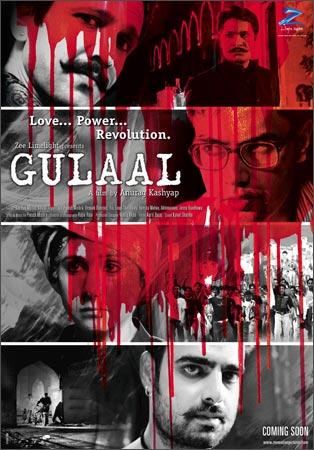
Gulaal gets a release date

poster courtesy: rediff.com.

and a poster.

The date, March 11, will most likely take advantage of the festival of colours, although this clearly isn't a film that will sit too comfortably with Khal-Naikaa or Silsila. Those who'd like to know more about what was meant to the smokin' Jesse Randhawa's first Hindi film need look no further than AK's posts on PFC. The immersion into the adventurous aural confections of Dev.D has just begun; one awaits the immensely talented Piyush Mishra's first offering as a music director. 2009 looks like Anurag Kashyap's year. जी जी जी जी जी.

Sunday, January 11, 2009

announcing: RMIM Puraskaar 2008

That's the second time in a row that I have delayed my post. Time to go listen to tandoori nights. Vinay is back with the third edition of RMIM Puraskaar. Voting closes tentatively by the middle of this month (not many days left).

The announcement's also posted on the giitaayan blog.

Saturday, January 10, 2009

hop and skip

It all started with a Velocity template error on a page in my bookmarks that I decided to visit again. The Wayback Machine couldn't help out of respect for and adherence to the robots exclusion protocol. Googling got me to DZone and thence to an old InfoQ article about changes in the Java Collections API made in Mustang. Two things caught my eye: "skip lists" and "William Pugh"; The former was a data structure that a colleague in one of my previous jobs had introduced me to (not that I learnt more about this data structure later, but I was quite fascinated with what I had heard). The latter is the father of one of my favourite software code quality tools, FindBugs. As it turned out, William Pugh invented skip lists. You would think that I would've got wind of this at some point given that Pugh was not an unknown name thanks to the tool. Yet, today was when the dots presented themselves to me, connected in glee. The final surprise lay in store for me over at the inevitable Wikipedia page for skip lists. The second reference listed on the page is a paper, whose co-author is a good friend.

Then again, not all coincidences are meaningful.

nominal irony

Satyam is such a nice name for the firm that represents India's contribution to the kind of newsmaking last dominated by the hubris of Enron. I really wish someone would write something about Satyam's firm in the vein of Malcolm Gladwell's article in The New Yorker titled Open Secrets. As with most such fallouts consequent of corporate socialism and executive greed, the employees down below earning pay for putting in hours of work are going to suffer most. The timing's rotten too. Those in favour of reeling in the lines hurled out to cheap herds of code monkeys across the seas have a great exhibit. The other biggies in Indian IT service providers are probably rallying to DEFCON 1 with each passing day fearing that a pair of smart eyes might just notice the creativity in their accounting (should such creativity exist). Indian filmmakers, meanwhile, are probably balancing their stack of news reports and oft-played scratched DVDs of Wall Street, Antitrust and Enron: The Smartest Guys in the Room as they attempt to find ways to squeeze an item song featuring Shilpa Shetty and Amrita Rao making out in family-friendly fashion in the Gobi Desert into a Mahesh Babu starrer based on the whole deal. Ram Gopal Varma could play Ramalinga Raju, but it could add an edge of the surreal and the darkly comic to a film that, minus the song and dance and weepy drama and synthesised sympathetic violin motifs, probably aimed to offer a "serious" family entertainer. Oh! We could even call his sons Shivam and Sundaram. We can then all join in to sing along with a remixed version of that Lata classic laced with transitivity:


ईश्वर सत्य है
सत्य ही शिव है
शिव ही सुंदर है

And hence, ईश्वर is शिव and also सुंदर. Quadrupled equality or triple beauty. Take your pick.

Wednesday, December 31, 2008

shut up and blam

At the risk of alarming people, I have to admit that my heart goes out to James Joseph Cialella Jr.

If you're like me, your blood curdles when you're sitting in the movie theatre and hear that annoying cellphone ring or that wretched form of human life sitting nearby jabbering away. If you're like me, you might occasionally politely let the source of this free disturbance know what pain he/she is inflicting on you. If you're like me and this is one of those desii theatres, you don't even mince words and even mix in simian growls and cynical asides. But even I would never do what I admire Mr. Cialella Jr. for doing. When a father and son nearby were talking away while Fincher's The Curious Case of Benjamin Button was playing, Mr. Cialella Jr., having tried the verbal approach and even the rather subtle move of throwing popcorn at the offspring, pulled out a gun and shot the father in the arm. He then returned to watch the movie until the cops came to arrest him.

It's extreme. I would never be able to do this. And yet, I'm cheering away.

Monday, December 29, 2008

and i wonder

How many different words have been used by those that name all the strip malls that inundate the American geography? I've seen pointes, places, plazas, villages and squares. I'm sure there are more I don't remember and more I haven't seen.

We all remember Sssshhh... (aka S4H3), don't we? One wonders if his appropriation of Jigar Muradabadi's couplet sabhii a.ndaaz-e-husn pyaare / ham magar saadagii ke maare for the song sapane is the only example of the Bollywood lyrical machinery lifting from this poet.

How many people noticed that Anu Malik was lifting his own stuff when he did the title song for Main Hoon Na? Try dha.Dakataa hai dil from Baazi.

Was I the only one who thought of Shankar-Ehsaan-Loy's be-imaan mohabbat from Ek Aur Ek Gyarah (one of those rewarding songs that seems devoid of any of the SEL trademarks that seem to pepper most of their work these days) when A. R. Rahman's aziim-o-shaan from Jodhaa Akbar started playing?

Didn't anybody notice how Pritam smartly took the a.ntaraa of aage bhii jaane na tuu from Waqt, sped it up, added his trademark wall of synthesised bricks and tossed it out as the a.ntaraa for the Usha Uthup song All Night Long in Dhol?

Did you know that If you navigated to the 00:13:38 mark in your copy of Emmanuelle in Space, you can hear the beat loop that underscores maa.Ngataa hai kyaa in Rangeela?

Did you spot Jatin-Lalit reusing the melody of the a.ntaraa of aa.Nkho.n me.n kyaa in 1996's Khamoshi: The Musical two years later for the second interlude of jab kisii kii taraf dil in Pyar To Hona Hi Tha?

Don't you think it's just a coincidence that an earnest riff played by the string section the second interlude in Anu Malik's teraa cheharaa mujhe from Aapas Ki Baat finds a sibling in the opening of the a.ntaraas in Pritam's lamhaa lamhaa from Gangster?

Sunday, December 28, 2008

extracts from the reading list

I have to toss a sop to coincidence when the phrase tout court shows up in two books that I picked up at the public library on Christmas Eve. I'm sure the phrase is not uncommon, but I have to confess that I haven't seen (or noticed) it before. As a tribute to the coincidence, here are some extracts from each book.

The first is the third book in Donald Spoto's series on Alfred Hitchcock. Spoto's name and work is known to any serious Hitchcock fan; A well-turned copy of The Dark Side of Genius: The Life of Alfred Hitchcock, the second volume in the series, lies in my bookshelf (gathering some dust, I must regretfully add). Employing a pun, Spoto calls the new book Spellbound by Beauty and it covers, as is evident from the title, the Master's obsession with his leading ladies (and especially blondes). Spoto has been accused of starting to paint a rather uncomplimentary picture of Hitchcock as a person, starting with his second book. This third book, as the preface indicates, seems to promise more material that is bound to offend those that hold Hitchcock in high regard, as a creative genius without blemish. But, as Spoto also points out, genius has never been free of a life peppered with hurdles, sorrow, hardship and personality flaws:


Writing or speaking anything other than the highest praise or failing to promote the most affectionate encomia for so august an icon as Alfred Hitchcock has become, in the eyes of many, equivalent to cultural sacrilege. But the craft of biography requires that the shadow side of subjects be set forth and comprehended - otherwise, their humanity is diminished, their pain minimised, and those they hurt are ignored. Any appreciation of Hitchcock's art and life must take into account the enormity of his psychological, physical and social suffering, as well as that which he (perhaps unintentionally) caused others. From his suffering came the obsessively recurring themes and the constant sense of dread with which he continues to astonish, entertain and enlighten.

The other bit comes from the wonderful introduction by Anthony Burgess to the compilation The Best Short Stories of J. G. Ballard:


Ballard considers that the kind of limitation that most contemporary fiction accepts is immoral, a shameful consequence of the rise of the bourgeois novel. Language exists less to record the actual than to liberate the imagination. To go forward, as Ballard does, is also to go back -- scientific apocalypse and pre-scientific myth meet in the same creative region, where the great bourgeois novelists of tradition would not feel at home.

The complete text of the introduction is available in the Google Books preview of the book.

The final extract (did I say two? I lied) comes from Emmanuel Carrère's book I Am Alive and You Are Dead: A Journey in the Mind of Philip K. Dick. It's a succinct description of what happens when a cult figure acquires mainstream acceptance and recognition:


Given the uniform Vintage editions of his complete works and the many articles about Dick that have appeared in both academic and popular journals, his fans must feel a little like the early Christians did when their faith was officially adopted by the Roman Empire: triumphant, of course, but also slightly nostalgic for the days when they lived in the catacombs. The Happy Few cease to be happy when they are no longer few. Dick has become part of the mainstream.
 
Creative Commons License
This work is licensed under a Creative Commons Attribution-NonCommercial-NoDerivs 3.0 Unported License.