Wednesday, August 31, 2005

the random article summary HOWTO [from rediff.com]


1. Take a famous actor (usually to coincide with a new/forthcoming release starring said actor)

2. Ask the usual interesting and perceptive questions (when will you turn to direction? [if you want to, of course]; tell us about this new film of yours, which looks as fresh as used earbuds; tell us about your next film; how did you prepare for this role? [if at all])

3. Ask a random question and use it to derive (with a lot of help from the hyperbolic postulate and differential geometry) a eye-catching title for the interview.

4. Pepper interview with photographs that serve the context (if any)

Bingo! You get An actor who researches on the Net.


Meanwhile, Puneites can rejoice in ticklish glee at another expansion of the good old TLA PMT. 'Tis Pyaar Mein Twist featuring the numerologically challenged Sammir Dattani, old screen pair Rishi Kapoor and Dimple Kapadia (for all you nostalgia freaks abroad) and (reportedly) a soundtrack with an RDB hangover.

Tuesday, August 30, 2005

facts boo-boo

We've read about the objections to a reference in RGV's Sarkar to a gold medal-winning "shooter" hired as an assassin. {more and more}. Essentially, Shaikh Ahmad Mohammad Hasher Al Maktoum became UAE's national hero after he won for the country its first gold medal in the men's double trap shooting event at the 2004 Athens Olympic Games. All this is commendable. But how do you take this and a stray reference in a work of fiction (limited to just words, it lasts less than 10 seconds -- and perhaps a few more in the later reference by Selvar Mani) and decide to get offended? We've had a long history of people choosing to get offended by things that were not intended as offensive. It's probably richer than the history of people who were offended by things that were meant to offend them. We've got people screaming It's outrageous. How can they depict a UAE gold medallist as a hitman? The movie should be scrapped immediately. Dude! Give yourself a break.

The latest salvo has a quote from Moraad Ali Khan, who won the double-trap team gold at the Manchester Commonwealth Games in 2002: "He (Al Maktoum) feels that this reference should immediately be removed so that it does not insult him and any other achievers who have excelled in the Olympics for their country." So they have more than one "gold medallist." I have to go watch RGV's film again, but I don't think the dialogues were particular about which real-life person they were referring to (and unconsciously offended). However, we have two people who might choose to be offended (and they've chosen the more famous of the two). Moreoever, the article gets its facts wrong about the reference:"In Sarkar, the character played by Amitabh Bachchan hires an Olympic gold medallist shooter from Dubai for contract killing." Dudes. Please watch the movie again, carefully.

The article concludes with another quote from Moraad: "Sheikh Ahmed was very direct on this issue. Although his name has not been mentioned in the movie, he took it as a direct insult as there is no other gold medallist in shooting in Dubai and the whole of UAE." Could someone tell me whom Moraad represented when he won his gold? We have two candidates here and we need to resolve this first, help them get their facts straight, and then give them a cold shower to focus on more important things.

Saturday, August 27, 2005

music playing on the overhead speakers at Octane [august 27, 2005]

What is Octane? A coffee bar and lounge on Howell Mill Rd near Marietta St. {more} Great place. Lots of space. Minimalist in tone. No frills. No chain-and-franchise-inflicted cool. Free WiFi hotspot. My favourite beverage: a large mocha coolant.

And now on with some selections from the massively variegated shuffle:

* Bungalow Bill / The Beatles

* Drive / The Cars

* We Like the cars / Le Tigre (no idea; looked it up online)

* I Am the Walrus / The Beatles

* You got it / Roy Orbison

* All the day and all of the night / The Kinks (rumour has it that Jimmy Page made a contribution on the record; the Doors stole the riff for Hello, I love you)

* Boogie Shoes / KC and the Sunshine Band

* One Way or Another / Blondie

* Video killed the radio star / the Buggles (ko_ii yahaa.N aahaa naache naache)

Also looking forward to Eric Clapton's new album Back Home, a laidback upbeat effort that seems to be in the Reptile vein. {review, sample track/video}

a handful of old viewings

[august 06/07, 2005]

So I finally managed to catch Schindler's List. Flashback: when the film hit the theatres in Pune, I was in Kerala on vacation. This was a brief trip, but all I remember was that the film played in the cinema halls for exactly one week. Terrible, really, because, for all its worth, the film deserved more than that. The editing and cinematography (aah the wonderful quality of the black-and-white stock) are strongly in opposition to Spielberg's conventional style[sic] of filmmaking. After combining these two elements with the cross-fading dialogue across scenes, the film became much better than I thought it would be. Not for the narrative or the contents, really. More for the technique. Overall, I wouldn't pan it as much as I had (partly out of my fear for everything that Spielberg has made, except Duel and Jaws). What worried me about the film was its length and the treatment of Oskar Schindler. Clearly, this man was not a duudh-me.n-dhulaa saviour. He had his vices and his shortcomings and the film (to be fair) brings these to our attention. But the film seems to suffer from this desire not to allow us to dwell on the rough edges of this strange diamond. And all the atrocities inflicted on the Jews seem to relish in the lack of colour on the stock (what's with that random dose of colour for that little girl?). Eventually it all sank into the miasma I associate with Spielberg -- emotional pandering. The man cannot get rid of his fetish for mushy mawkish excess. Given Ben Kingsley's stellar turn as Itzhak Stern and Ralph Fiennes' interpretation of Amon Goeth, I'd have preferred a character study instead of a sweeping tale of redemption and rescue. I should watch The Pianist again and see if these observations might hold for that film as well -- the first time I saw it, I liked what I saw, but I fear that time may have altered my views on films in this genre.

This was somehow followed up with Be Cool (based on the Elmore Leonard novel of the same name), the sequel to Get Shorty (based on the Elmore Leonard novel of the same name). The film begins like a self-conscious sequel. So there are lots of digs at sequels and even an internal reference Get Leo to the first film. The mechanics involve record label owner Tommy Athens (James Woods) who is pitching himself to Chili (Travolta) as the subject of a movie. The problem with having Travolta doing his little jig in a movie that seems to enjoy referencing itself is that we've seen him do it before, and perhaps in a more subtle way (see Swordfish for that nice take on Hollywood and the semantics of Groundhog Day Dog Day Afternoon). This means the loss of value for nice moments like the one when Chili mentions how a film needs to only use the "F" word more than once in order to get an R rating. He then uses the "F" word - the only use of it in the film - and thus, this film gets a PG-13 rating. As soon as Tommy is bumped off shortly thereafter by a Russian hitman with a problematic wig, the film begins to go to sleep. The references (trying to be both fond and smart) are not interesting, and after a while the best graphic representation of the goings-on is a flat line. Dead. Time for the morgue.

After having sympathised with and laughed at friends who had been unfortunate victims (note: I do not even want to talk about people who decided to watch the movie on their own volition) of the Will Smith sick-chick-flick Hitch I ended up drowning in the soup myself. The ugly (IMO) Eva Mendes (see also: Training Day, Out of Time) joins the festivities where a lot of the dialogue seems written as a mainstream attempt to sound intellectual. I can't think of a real-world experience that can serve as a parallel for the experience of watching this movie. It's a mix of anguish and anxiety, the FUD of having to wait for something that your life depends on in a room that's completely ill-fashioned for the occupant, accompanied by sick feelings in your gut, sautéed with foul smells, your most hated cellphone ring-tones, idle party conversation, re-runs of Friends without the studio laughter (which means you have no hints on when to laugh), and a wet skunk in your lap. This damage deserves some serious remedial action. Or as Roger Ebert puts it, "it just doesn't seem entirely necessary."

Why is it that other less (or hardly) important films have made it through the VHS years successfully and have managed to get a reasonably decent version of themselves onto DVD while classics like Bimal Roy's last film as a director, Bandini seem doomed to death through slow degradation? Why can't the people who have the power and ability to create a record of India's great movies understand the cinematic vocabulary and grammar so evident in this film? It's not the obvious aspects like the performances and the songs. It's not the sometimes-tiresome comic interludes and the occasionally stilted lines of dialogue. It's about the sheer open-endedness of the story, the influences of expressionism, the wonderful use of chiaroscuro. Please. Someone save this film before it's too late.

As a coda, I'd like to offer my sympathies to anyone who missed watching Sarkar in the cinema hall. I don't do this because I'm getting a kick of superiority out of being able to watch it in a cinema hall. I do it after having seen a videotape sourced from the DVD recently. The audio-visual quality of the film that was so evident on the big screen has been sullied, processed with a mud filter and reduced to something that resembles a TV serial shot with a complete lack of understanding of lights and sound. That, IMHO, severely affects the impact of the film. Sure, it doesn't mark a new milestone in Indian cinema (although it has its place), but this butchered print doesn't give you any ammunition to argue for the movie's merits.

three films

Mujhse Shaadi Karogi should have been a warning for me as I sat down to watch Maine Pyar Kyun Kiya [Kyun kyo.n???]. How people continue to choose forms of life (aka "actors") who lack comic timing, or even basic kindergarten annual day-level acting smarts for comedies is something I have failed to comprehend. Priyadarshan (rant elsewhere) managed to convince a multitude of viewers that AxeHay Kumar and SwooKneel Sh*tty (among other termite-infested pieces of wood) could (a) act (b) be capable of comic timing. Kamal Haasan (despite the general lukewarm clamped quality of his Hindi releases) managed to score better by picking people, who had the gift and could deliver a crackling performance given a conducive milieu (Vijay Raaz, Saurabh Shukla). David Dhawan's rising star owed a lot to Govinda (and Kader Khan). But later he attempted to try and convince us that certifiable pieces of driftwood (and pioneers of the "socially acceptable menace to society" genre) like Salman Khan and Sanjay Dutt were also capable of comedy. Loud were they. Very loud. And yet, the cash registers didn't stop ringing. Despite their inability to let go while indulging in the comic business (something Govinda managed with consummate ease), these planks managed to make great strides. Dhawan snagged an ebb and then returned with Mujhse Shaadi Karogi, which, despite being a welcome hit for him, was a so-so affair that you laughed at only perhaps out of pity. The emotion extends to this Sohail Khan co-production. Anything with Sohail Khan in it is usually a stink bomb (except, perhaps, for DMH). This one's no exception. There are lots of really really bad jokes, which basically require someone competent at comedy to deliver them. Arshad Warsi, Sushmita Sen, and the inconsistent Rajpal Yadav can't make it work though. They're relegated to the deadly competition of limited screen time and paltry dialogue. Instead the camera and film stock choose to focus on three items that belong in a furniture store: the aforementioned Salman Khan, the illustrious skunk Sohail Khan and the dumb airhead Katrina Kaif. Kaif is yet another classic example of the misguided soul, who has been chosen to be on screen solely because of her looks and not for any acting smarts (which she lacks). The problem with such souls is that they "believe" that they are on screen for their acting smarts (for other such lost souls see: Aishwarya Rai, Payal Rohatgi, Neha Dhupia, Isha Koppikar, Eesha Deol, Mallika Sherwat, Lara Dutta, Priyanka Chopra, Kareena Kapoor [yeah, yeah, I know, no looks either] usw.). Sorry. I couldn't take this movie. It wasn't good; and it wasn't bad enough to be funny.

Next up, Amol Palekar's commercial-fest Paheli. Beautiful production values. A simple tale told with a reasonably high coefficient of languidness to put anyone to sleep. There just didn't seem to be any spark of verve in the narrative. It was a folk tale without the magic. An interesting conundrum without the interesting elements. Songs that didn't impress me on the audio release and, in the film, only encourage the use of the FF button. And enough reason to try and find Mani Kaul's Duvidha.
[August 29, 2005] Some follow-up notes thanks to being privy to a marathon of viewings by friends (all still in parts; I can't bear to sit down and watch the whole flick). Noted husband/wife Naseeruddin Shah and Ratna Pathak-Shah as the voices of the puppets. Noted the potential of the puppet dance (seen during the previews -- also the reason I decided to stay away from the film) during the end credits -- IMHO it fails to live up to its full potential as a motific device of counterpoint. Noted the presence of Mohan Bhandari and Ravi Jhankal. Noted the obligatory Amitabh Bachchan appearance. Noted that the ominously egregious presence of Suniel Shetty. Noted that SRK the actor has potential, but this is not the movie to tap into it. Convinced that Amol Palekar has gone commercial. Didn't know fairy tales could be so boring.

Stephen Chow's Kung Fu Hustle provided the required catharsis. I had caught fragments of this film *before* it hit the marquee here (see also: Hero). I haven't seen the much-mentioned twice-butchered Shaolin Soccer yet, but this movie rocks! Quit complaining with whines like "oh! this is clearly wire-work/CGI/impossible." You're missing the point of the film. Chow knows that you know this is fake. Sit back and grin and let your jaw drop. Everything here is overtly stylised and extremely wonderfully choreographed with breath-taking attention to detail. This is crazy mix of Buster Keaton, Jackie Chan, Quentin Tarantino, the Bugs Bunny/Road Runner cartoons, spiced with some more spoofing of The Matrix (no surprise to see the name of stunt choreographer Yuen Wo Ping, who also contributed to Kill Bill I and II). The most interesting thing for me in the film was the sense of dislocated time. There's so much that the frames imbue from the "present" and other referenced times (the Shaw Brothers films of the 60s and 70s). There's that lovely shot framing Chow and Sheng Yi Huang in a pose that echoes the poster of the Astaire/Rogers starrer from the 30s, Top Hat). And if you want more Top Hat references take a closer look at the Axe Gang. The exotic background score is another complex goulash of times and periods that also features Khachaturian's "Sabre Dance" and selections from Sarasate's "Zigeunerweisen". The cast roster features several icons that I am only marginally familiar with (time to get onto the martial arts wagon), but a little googling should assist the curious reader. The finesse and high production values make me hang my head in shame as I think about the state of Bollywood filmmakers on the other hand -- everyone else seems to be making more interesting mainstream cinema, but all the Bombay folks can do is import the motion-capture machines used in The Matrix and instead of doing something interesting with them, use them to produce a stupid 4-minute sequence in ... [in true Finnegans Wake tradition, let's go back to the beginning of this post]

Friday, August 26, 2005

scattered notes

on David Mamet's Make-Believe Town

Make-believe town is a collection of short pieces covering a wide range of topics that are dear to award-winning playwright David Mamet: his early days, everyday life, the arts (the theatre, moviemaking, acting), politics, relationships and Judaism. This seems contrary to the idea that the title would give you. Well, me. A title like make-believe town seems to convey the idea of Hollywood, California. The world of film. The world of make-believe (duh!). The title comes from one of the contained essays, by the way. Yet, the idea of make-believe is an undercurrent in all the essays.

While each essay showcases Mamet's love for and craft in the rhythm and cadences of words, Eight Kings is the only essay dedicated to some aspect of language. Herein he pens his observations on the lingo of craftsmen, carnival folk and people of different trades and walks of life. The theme: jargon provides a make-believe mechanism for identification in the trade that uses it.

The thematic significance in Gems from a Gambler's Bookshelf, which describes different aspects of Poker, is hinted at in the third paragraph. Poker defines a "circumscribed arena", a make-believe replica of the Game that goes on around us all the time, with its own "artificial constrictions".

There's the too-good-to-be-true angle in Sex Camp is about a New England college that did away with the traditional education process -- no grades; all the courses of study were designed by students with their advisors and pursued at their own speed.

In addressing different aspects of writing, Mamet devotes a few articles (Memoirs of Off Broadway, Greg Mosher, Delsomma's) to the milieu of and beyond the stage. The Diner is all about writing the good old-fashioned way (without the diversions of a computer) and great places to do so. The Northern Novel contends that the novel of the North-West as the Frontier represented the Great American Novel (while the novel of the East is a "second-class European experience"). Harsh. And he seems to prefer "the boredom of much of Sinclair Lewis to [...] the triviality of much of Henry James." Then there's the delightful little piece called The Screenplay, which serves up a couple of subtle lessons in the craft. It's Necessary for the Scene disputes the importance of the obligatory sex scene to a film. Girl Copy describes an odd vocation/occupation -- staring at "blues" (blue-and-grey 1st runs of to-be glorious colour spreads ... of naked women) and writing fantasies. Therein is a description of people writing letters to the editor using names and neighbourhoods (but making sure that there are more than three of the kind in order to avoid legal issues).

I didn't care much for the detail of Deer Hunting, perhaps because it has nothing to pique my interest. Homespun Fop talks about the conventions of dress and style. Between Men and Women is a general note about relationships.

The Recrudescence (lovely word that) of the Swimming Pool Joke shows us how a classic joke is attenuated by refurbished retelling that dispenses with any delicious ambiguity.

Cleansed by Death features a reference to the Hindu practice of "suttee" and notes that in the West "we clothe our primordial observances with nicety" and then everything segues into a diatribe about Nixon. There's a nice phrase there too ("the impotent dead").

Veiled attacks at hyperactive beliefs come from Demagoguery and Self-Help.

Art as a Helping Profession presents the strata of vocations and notes the trend of leisure that is now validated by society -- pseudo-art, as it were (video-art replaces filmmaking and installations supplant sculpture). It's about how the mob endorses the meaningless and how the audience "performs enjoyment rather than expressing it." There's a useful thought to take away from the article: Art is ennobling only as and to the extent that joy may ennoble.

And then we have a Semitic overdose. There are interesting ideas presented in a bag of vicious retorts: Minority Rights presents the subtle arguments to the "Church vs. State" debate while talking about Jewish kids in a Christian community; the holocaust and memories thereof get new perspectives in The Jew for Export (wherein Mamet also expresses his distaste for Schindler's List for its "emotional pornography" [there's more about Spielberg here]), In Every Generation, the essay that gives the collection its title and Memory.

The greatest thing about the collection regardless of what your preferred topics are are the language and Mamet's dexterity in plying words like a prestidigitator. If you like his movies and writing, there's more to relish in the subject matter of some of the essays. The overdose of all rants Jewish might get to some readers, but it's still a POV, and for that alone it's worth reading.

pieces...

A Nagesh Kukunoor interview (ignore the case of duplicated text please) with Screen about his forthcoming film Iqbal features the following bit of indirect association (my emphasis added):

Are you acquainted with the life of bodyline bowler Harold Larwood?
Yes, I am. Why?

One of Larwood's tricks was putting a coin on the track and using it as a target.
And Iqbal does it too! It's just a coincidence. I have seen the Bodyline series but have no recollection of that particular incident. Thanks for reminding me. Henceforth I can say in my interviews that Jardine was my inspiration.

Thursday, August 25, 2005

give 'em power

Not long after the latest bit of spatchcocking from SRK, we have soon-to-be-Ambar Preity Zinta voicing her thoughts about her recent 'Operation Clean-up' in an Indiatimes Movies [Filmfare being the print avataar] interview. The interview is presented rather irritatingly (whaddya expect? these guys share the same intellect as the people responsible for hosting and posting to the Tabloid of India) as a set of pages with lots of ugly links all around and a small section in the upper-top dedicated to some ugly text and a large ogleworthy photograph of Ms Zinta (it's a different one on each page). Talk about screwing up your perception of the purpose of the article. Oh well. The gems (should you be patient enough to tear your eyes off that eye candy and wade through those teensy-weensy links at the bottom) are not as rewarding as SurReal Khan, but enough to revive the titters:


Its 2005, why are the other countries in the world not so dirty? Why is India so full of filth?

The importance of garbage removal is not to take it out of Bandra and put it in Deonar, in the dumping grounds. They will expire the grounds there, too. They need to set up a recycling factory, and if the government is incapable of handling the garbage they should privatize it. Look at the airline industry, at one time it was monopolized by one airline, today we have so many. It's so much better for the consumer; we have the best airlines in the world.

I think Mumbai is turning like America; psychos are coming out and killing people.

Our judicial system is so slow and weak that we actors have now become victims of yellow journalism. (incidentally, the photograph accompanying the fragment containing this gem features PZ in a dress that contains the colour mentioned!)

{via uma}. Could someone tell them to stop using Microsoft Word with the default language setting of "English (US)" to type and publish pages on an Indian film rag? It's "travelling" back home and not "traveling" (unless you've in-sourced the damn thing).

There's more Bombay/Mumbai idiocy from Raj Thackeray [should be Thakre?] with Bombay/Mumbai Godfather ... It's Deepak Balraj Vij. I mean, who cares?

Elsewhere, Kay Kay Menon gets some more newsarticle time thanks to the success of Sarkar. Yo! it's time to give Black Friday {music review} and Paanch some breathing space. Release them. NOW!

Elsewhere, a long post by yours truly about a Harlan Ellison compilation sees the light on Mount Helicon. And --- BlAm! --- it's already getting it's share of comment spam. Can it now!

Wednesday, August 24, 2005

empower this!

After the wayward wafts on the cigarette smoking ban, Shah Rukh Khan returns with a fresh blast of surreal, post-modern, priapic paragraphs as he writes in the Indian Express about making people wear a smile. This article merits multiple reads, each revealing more facets into a text so rich as to deserve a Joycean plaudit. A few excerpts (which fail to do justice to the source text):


As I see it, our grass is as green as anyone else's. That's why I won't ever do a Hollywood film. Rather I'd like to do a Hindi film that does the business of a Hollywood film

Be it malls in Gurgaon, irrigation in Punjab or computer advancement in Hyderabad: greatness is happening every day. We're unaware of it but we're definitely not worse than what we were 50 years ago.

Disinvestment and the removal of Foreign Exchange Regulation Act (FERA) show that all this is an educated process. And we aren't just following any monkey business. We're empowered in thought and that's crucial.

It's very simple: if I want to make a TV film for children, I will do something like PlayStation.

Make no mistake, I stand for empowerment of escapism


And while you're there, take a look at the comments, which provide another alternative reality that seems like home for verbiage like this [thanks to AD for pointing me to the Read comment[s] link down at the bottom past the Google ads)

Interviews that didn't measure up on the DaliDevice include an imaginatively titled blurb in the Indian Express called Watch this man (SRK and Tag Heuer) and Suderman's collection of fragments that made it to the Hindu. An excerpt from the latter:


Q: You've been working mostly with people who are your friends...

A: That's not true. Everyone asks me. But I've worked with first time director Nikhil Advani.

Q: That was written and produced by Karan Johar.

A: Farah had never directed a film. Even Karan and Adi were first time directors when I did their films.


Oh yeah! Hey, people who write HTML for The Indian Express and The Tabloid of India: Get some brains and smarts and stop using MSFT/WYSIWYG bloated editors and pasting text abundant in rich quotes and special characters that look like your dog's behind on a lot of browsers. Get off your lazy butt and give us some lightweight pages instead of treating us to XML Schema dumps from MSFT Word.

Tuesday, August 23, 2005

preoccupied with superheroes ... again

But first, a smaller entry in the chain of library haul reports: Fodder for linguistic glee with Kate Burridge's Blooming English (whaddya know? Yesterday was National Punctuation Day in the USA). Two chips off the old Bloch with Last Rites, Volume III in the trilogy called The Selected Stories of Robert Bloch (the publishers Underwood-Miller were also responsible for the 5-pack The Collected Stories of Philip K. Dick) and Midnight Pleasures.

And now, dear reader, we come to Jonathan Lethem's new collection of stories Men and Cartoons [more elsewhere here-wise]. The book features some of the motifs I've seen in Lethem's other books (some directly as a reader, some vicariously while browsing articles and reviews). Super Goat Man makes no bones about Lethem's taste for comic books and comic book lore. It's an interesting bent to have for story-telling, and I hope to see more examples of such influenced work (perhaps less overt the next time?). The collection opens with a Carver/Hempel-esque (there might be more direct influences, but these notes are based on what I've read) story called The Vision. The story exploits both a mundane setting and the adoration of comic books in a better way than the more overt Super Goat Man. Access Fantasy mixes social satire (complete with a dystopian view of the future) and an amateur detective to good measure. What stayed with me were the parameters that defined the society: a combination of trailer parks, barriers, and in-your-face advertising with a vengeance. Then there's the O Henry-esque-but-not-quite domestic tale called The Spray, which mixes another element of fantasy into a slice-of-life tale of love and past infidelities. Vivian Relf is a story with an interesting premise: a man meets a woman at a party and both of them are sure that they have met before. Yet they haven't. Repeated encounters only serve to punctuate the man's life. Planet Big Zero tells the tale of two childhood friends who seem to have drifted apart as time went by: one of them is now a writer of a comic strip and the other doesn't seem to have done much with his life. It marks an ebb in the collection, but The Glasses (which begins with the delicious Rows of frames sat on glass shelves, clear lenses reflecting gray light from the Brooklyn avenue. Outside, rain fell. At the door a cardboard box waited for umbrellas.), a delightfully strange tale of a black customer who complains about smudges on his glasses to two duelling arguing opticians. The last story The National Anthem didn't do much for me. A disappointing coda to an otherwise interesting collection.

But wait, the most rewarding story is this oddball nugget called The Dystopianist, Thinking of his Rival, is Interrupted by a Knock on the Door. A very Borges-ian opening The Dystopianist destroyed the world again that morning, before making any phone calls or checking his mail, before even breakfast. He destroyed it by cabbages introduces us to the tale of the Dystopianist, who, in true comic book fashion, finds a rival in a childhood acquaintance, who is now the Dire Utopianist, who has rendered him and his work ineffectual; and then his visions begin to come true. It's a delight that should have closed the book; or perhaps move closer to the end. Such quibbles aside, this is another display of an intriguing imagination fuelled by science fiction, fantasy, and comics.

Friday, August 19, 2005

scraps

via JR's post: Kapeesh's post on the nominal undertones of Double Cross: Ek Dhokha. Come to think of it, Ketan Mehta's fat flick is called Mangal Pandey: The Rising and not the other way around. Without the colon, that might well have been a movie about (a) a zombie (b) the undead [see (a)] (c) medical problems [nahii.n laurena!] (d) ma.ngal as an apotheosis of a renewed attempt by the opressed class to rid themselves of the yoke of domination [oh wait, that's what the movie's about, isn't it?]


Bob Moog is no more.

Pool efforts on Internet Advertiser Wakeup Day [November 13] {courtesy: the kind folks at BugMeNot}

Wednesday, August 17, 2005

eye candy

Noticed while catching up on my Yahoo! Groups: They changed the CSS stylesheets so that the message body now shows up in what looks like Lucida Sans Typewriter (superseding the original choice of Courier New). It's a common font for code samples in technical books, and it looks nice (because it's new, it looks nicer than Courier New, but the magic of novelty will fade away soon). Viewers on Un*x boxes will probably still see Courier New text, unless they've been adventurous with font system configuration.

Would you call Mac OS X on Intel "Ten Little Endian?" (Michael Swaine in his Programming Paradigms column titled "Freon in the Styx" in Dr. Dobb's Journal September 2005)

We are all serving a life-sentence in the dungeon of self (Cyril Connolly, quoted in Harlan Ellison's introduction to Slippage [déjà vu?])

Tuesday, August 16, 2005

[this post from memory]

So, I managed to overwrite the contents of this post and found out over a week later, but no online cache/archive seems to have a copy. All I know was that herein lay notes for a new link in the chain of library visit logs. I know I picked up Lethem's Men and Cartoons, Ellison's Angry Candy, American Psycho by Brett Eaton Ellis, thanks to a note from Sudarshan and David Morrell's First Blood. {For a moment, thanks to that faux pas, this post referenced itself. Something to cherish?}
hello ... goodbye

salaam namaste boasts a Wikipedia entry thanks to either the marketing department of YashRaj Films (what? net-savvy??) or some over-enthusiastic fan (dude/dudette! Spoiler warning??? are you frigging kidding me?). The only plus so far is that the title is already iTrans-friendly. It's another entry in the burgeoning genre of the chick flick of and for South Bombay/NRI yuppies. Lotsa oh-so-cool and blah. There's the legacy of Hum Tum (the foreign locales, the cool edge to the love dredge, the hate-and-uncertainty-turning-to-love, the old bits and pieces of the ages recycled) as well as Kal Ho Naa Ho (take this all to a foreign land, preferrably one that offers a friendly market). If you're keen on more story details, try these character sketches.

The soundtrack is the first offering. Obviously, the label's Yash Raj Music. Although the website notes that the price of the CD is $4.99, they also note that shipping costs are extra. If you are even thinking of purchasing a copy for yourself (or for your grandchildren to remember you by), this might still be a good place to grab it. Desi grocery stores are likely to hike the price up close to $10.

On with the mu[sic] itself. A trend to note in the arrangements is the collection of North Indian oye-dance-baby elements, since this is after a Yash Raj product. It has to appeal to the North belt. Vishal Shekhar are roped in this time to produce another peppy soundtrack (based on their recent work, that is). The obligatory club mixes exist (mastered by the usual culprits DJ Aqeel and Nikhil Chinnappa; and there's also Naved -- brother of Javed?). Backgroundsmen Salim and Sulaiman Merchant, who went live with mainstream music composition with Kaal are around for the arrangements. This, IMHO, is a big failing. The title song starts off with a strong hangover from those days. The samples also sound suspiciously like picks off a Kunal Kohli wishlist. Jaideep Sahni (who already has quite a few screenplay, dialogue and lyric credits under his belt) seems to have submitted all his lyrical drafts over email in one evening. Do not (I repeat Do not (I repeat Do not)) expect lyrical depth of any kind beyond the thickness of an earthworm's cuticle. Kunal Ganjawala and Vasundhara Das are the officially named voices on this mix of aahaa-chorus, Dhol samples, and enough lures for specious minds. The Shaan song that comes up next runs on a riff that sounds like a time-sampled leftover of the first song. And when he gets to the chorus (##my## dil goes ##mmm##), you have to go and find your copy of the Crash Test Dummies song. At least that one was entertaining. Gayatri Iyer does it by the numbers. Lyrical snippets include haa.N ##picture## me.n rotaa hai; haa.N khulle[sic]mu.Nh sotaa hai. And the patentable spoon-and-glass effect courtesy the late R D Burman and appropriated by Jatin-Lalit shows up. If you want something challenging to do while listening to these songs, try exercising your ability to complete each line. And just when you thought it was over, there's a scale change at the end, which doesn't quite work. Ugly. Go listen to one of those unending Rolling Stones songs instead. Aah, a whistle at the end against a soundscape that owes a lot to Vishal Bhardwaj.

Break time. Go find a tissue or a number to call back and try and get a CD exchange ... or kill that roach running around on the floor ...

Silly riff on the next number, with a deep voice intoning Cool. There's a mrida.ngam sample. And then after a perfunctory happy chorus Kunal Ganjawala steps up to the mike with the lyrical winner paune baarah baje dono.n ghar se chale ... ##what's goin' on##. Sunidhi Chauhan joins him on the quest for something to do. Quit already. Despite a nice job from both of them (although they've done all this a million times before), there ain't much about this dud (except a nice complementary progression on the turnaround to the chorus). Clap away near the end and hit FF.

Up next is the most bearable number on the album, and also the slowest. Sonu Nigam and Mahalaxmi Iyer share honours on a simple melody and mild arrangements and decent guitar fills with tuu jahaa.N mai.n vahaa.N.

The mixes begin. The "English Club Mix" of ##my## dil goes ##mmm## features Shaan and Carlisa Monteiro returning from Dance Masti Again's o merii soNii; Shaan lays the accent and style a bit too thick, but the arrangements and dance-o-drown ambience are more appropriate for the pointless lyrics (and also assist in drawing your attention away from them). There's the predictable "Dhol mix" of the already-laden-with-enough-Dhol title song. Same singers. Hardly much to remix, and yet they add something that I'm sure they'll call "subtle". Go listen to the title song of Kaal to get over the déjà vu. DJ Aqeel dispenses with the singers for the final track on this offering, an instrumental (sorry, have to break for some intense laughter) version [read: in addition to the existing samples and pounding beat, add a trippy sample to play the melody] of ##my## dil goes ##mmm##. This is the final stage in the normalisation of a song that began with badly balanced and egregiously obviously bad lyrics. Now that we've taken the lyrics out of the picture, we're left with a harmless piece of club ambience (that recurring chorus reminds me of the chorus on Wah Wah from No Quarter. This ladies and gentlemen, is when we must say Goodbye. You say yes, I say No. All that fun stuff.

Despite the lifts and the worse lyrics I preferred Chocolate and James. Predictably someone who didn't care much for James would find Salaam Namaste the greatest thing since a triple schezwan (read: "Spirited, fresh, young and trendy")

post crypt: That wiki page offers the translation of the title as Goodbye Greetings or Goodbye Hello. Am I the only one who seems to disagree with both? I doubt that pun-laden irony or stretching meanings was part of the agenda for the person posting that entry.

Monday, August 15, 2005

independence ... from what? [being a completely inappropriate title for what is to follow]

saul bass
which isn't much besides me going gaga over a wonderful collection at Not Coming to a Theater Near You called Titles Designed by Saul Bass comprised of title sequences designed by Saul Bass (duh!) along with accompanying notes and comments {courtesy: Greencine Daily}

May I also proffer the most lucid and outrageously entertaining review of The Rising: Ballad of Mangal Pandey (the semi-colon represents my addition to avoid ambiguity) aka Mangal Pandey: The Rising. {That's Arun Simha's blog BTW, for quizzing afficionados/Quiznet regulars/)

Elsewhere is a nice little feature on the unsung composers of RGV's Factory.

Oh yes, and Sholay turns 30 today; and Raakhee Gulzar notches up another year.

Sunday, August 14, 2005

two bookstores on a saturday [august 13, 2005]

A visit to Borders and then to Barnes & Noble bridged by my first visit to a Chipotle. The first visit gave me a chance to sample Robert Plant's latest album Mighty Rearranger [more here], which features a rewarding song in 9/8 called Freedom Fries (Incidentally, Plant mentions India in an interview for NPR that was broadcast around the time this album was released). The shelves were dismal as far as stocking Harlan Ellison works was concerned. The second visit was worse -- only Strange Wine showed up. Weird. You would think that Ellison would have more presence in the stores. Oh well. Other music samplings included Mark Knopfler's One Take Radio Sessions.

Saturday, August 13, 2005

the strange things that bring people here

Thanks to having installed a StatCounter tracker I've found out how many different combinations of Google searches can bring someone to this place. There are innocuous ones like "maqbool montage", "kumar sanu blog" (the horror! the horror!), "background frightening music of darna mana hai for download". Then there are the usual salacious searches like "c grade soft porn movies heroine", "peeya rai choudhuri naked", "diya mirza naked", and the impressive "archana puran singh's hot pictures". The usual leer-friendly stuff that's also topical: "which film actress played manoj bajpai's sister in pinjar" and "sandali sinha prostitution" (most probably in connection with this, except that I'm not sure if the news article got the part wrong about "Manoj Bajpai's sister" (Sandali Sinha played Sanjay Suri's sister; not sure if Bajpai's character's sister had too much screen time, if at all)). And we end with the bizarre "mohan lal gay" and "bappi lahiri destroyed in flood" (oh how dare you think such things!!).

Thursday, August 11, 2005

the bibliophile's bash III

[and then there was II and then there was I]

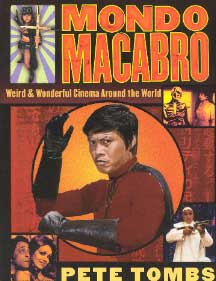
mondo macabro Yours Truly was back at the library. Having deposited a few returns, YT proceeded to the shelves browsing. YT knew there were holds. But this was the second part of the visit: Impulse shopping, without the purchase. YT spots Joe Queenan's The Unkindest Cut, wherein he chronicles his attempts to write and make a movie (12 Steps To Death) for less than $7000. Since YT has enjoyed reading other Queenan works. The cynical take on populist mush and pandering tripe has been a comfort on many an occasion.
YT then spots the golden pick of the evening. Innocently sitting on the shelf above is Mondo Macabro: Weird and Wonderful Cinema Around The World by Peter Tombs. YT knows that Peter Tombs is also behind the site of the same name. What makes this wonderfully delightfully catalogue of bizarre movies is the set of two chapters dedicated to Bollywood (with a special emphasis on the Ramsay/Bhakri horrors that YT has always relished).
dariya dil LP cover

This book also features the Dariya Dil LP cover (take a look to your right) from Niall Richardson's LP cover collection (the actual page for the record is here) that made it to a BoingBoing post as well. Needless to say, YT is interested in the soundtrack.

YT now performs some complicated mental computations involving addition and subtraction and estimates that YT will not tip the scales on the maximum number of items one may have issued out from the library. YT proceeds to the checkout counter. The weary lady smiles knowingly (unless YT is imagining it). She has trucked stuff off the holds for YT; it's unlikely that someone would forget that.

After scanning the card, she informs YT that there are 8 holds waiting. YT has to perform some quick calculations, but shock at the upward blip in the number between the last time YT checked the list online and now results in a clerical error. YT is prepared to sacrifice a book.

YT's eyes now follow the lady to the holds shelf. YT realizes how eerie it is to see your name staring back at you. Several times. Hand-written. Man! That book is huge. Turns out to be one of several Harlan Ellison books that have arrived. It's called Medea: Ellison's world (probably owes its name to Medea), a document of the process of creation of Sci-Fi: from world to character-driven tales. Should prove interesting. Next up is a collection titled Alone Against Tomorrow: Stories of Alienation in Science Fiction. Nice cover. Then there's Edgeworks I. Although the reports on content have been slightly negative, there's another entertaining bogus author bio, and it's the packaging that makes having a good old printed book worth it.
mefisto in onyx cover by frank millerThe same applies to Slippage. Aside from a lot of typographical excursions (placement of phrases and words in keeping with the title), there's also the mass-market appearance of the long short story (yeah you read that right) Mefisto in Onyx, which YT just finished and liked for the theme, and the language, as well as the cover art and introduction by Frank Miller (words and phrases to remember: "jaunting into someone's landscape" and "shrike").

With enough Ellison to drool over for the next few weeks, YT now moves to the next few items. There's Nabokov's postmodern undersung Pale Fire, which ends up on the list thanks to a vigorous month-long recommendation from Sudarshan, who also posted a review on Mount Helicon.

And finally, since YT is a film buff, there's Sam Peckinpah's West : new perspectives.

A splendid time is guaranteed for YT.

Wednesday, August 10, 2005

the future of public transit

Picture a long dark tunnel. Peppered with short bursts of painfully ephemeral illumination provided by the occasional terminally ill 50 watt bulb mounted on the wall. Imagine that this illumination follows exponential decay, which means that the illusion of light persists, yet it's actually getting darker. That my friends is the future of public transportation in the US of A. My point of reference will be Atlanta, since that's where I exist as the satyakaam of transit travel.

What we have is an idea called "Atlanta". Why an idea? Because in cities like Chamblee or Marietta (which fall in different counties as well), you can get by with an "Atlanta" in your postal address. Which means that "Atlanta" extends to accomodate and supersede other cities. Which aids the idea of a sprawl very well. And what a sprawl. The dregs of the city and the expanse of the suburbs have colluded to make this interstate highway-based "living[sic] space" a challenge for public transit.

And "public transit" is also an idea, instead of a wonderfully managed city or state-supported entity. We have disparte systems in place that intersect at politically defined rendezvous points: I know of MARTA, CCT, and Gwinnett County Transit. Note that the first entry in that list is the only one that does not betray its county (Fulton, BTW). Administrative granularity ensures that no one gets along. Counties supersede city and state regulations (very few of which seem to favour public transit, based on what I read on a regular basis). Your taxes do not help public transit in any way.

The only "transit" your taxes support is the kind that you sink $$$ into and get only frustration, hypertension, injury, high medical bills (aren't they always?) and death. And everyone seems to be fine with it.

A high percentage of Americans (the last I read it was about the same figure as the percentage of Americans who didn't have some form of health insurance ... but don't draw any correlations there). Yet people want to have their cake, eat it, and belch freely too. So people constantly rant about how allowing public transit into their area is going to infect it with undesirable social elements. Of course, they're fine with road rage and wasted time and $$$ getting to and from work (which occupies a bulk of their week). And their representatives in the administrative offices help to present this counter-argument to discourage any useful legislation in the support of public transit (see the end of this rant for more).

This "city" is already splitting at its seams (and running over) with traffic. And it's not multi-modal. Well, in a way it is, thanks to the large gas-guzzling vans and space vehicles that terribly incompetent drivers seem to hurl at you from different directions. Makes for a great horror movie. As long as you are not in it.

The only thing going for MARTA is the train. And they just slashed the schedules yet again. The reason the train gets more points is because the buses never offer a clear advantage. Buses have to share lanes with frustrated and frustrating drivers. Now, if you are stuck in traffic, wouldn't you prefer to be stuck in your own vehicle (and perhaps exercise some more options of escape) than in a bus? And guess what, the buses are being progressively slashed as well. It's a great way to reduce your losses. But it's also a great way to discourage people who want to use your system. Rest in peace.

The CCT buses are nicer than the MARTA buses. The latter have had fuelling issues with their CNG systems. The latter also enjoys the recent addition of Transit Television Network screens that only serve to add to the unwanted chatter you have to deal with in the bus (see also: jack- and jenny-asses talking ever so loudly on their cellphones in aggravating pitches and frequencies). Both bus systems share the same basic problem of trying to cover as many points with as few buses as possible. Which means that the routes taken are so sub-optimal, Edsger Dijkstra would collapse in shock several times over. All this happens for "cost optimisation" (put a 'z' there instead of an 's' if you're waiting on your green card).

I haven't used the GCT, but I don't expect a grand

And then there's the yet-another-attempt-to-unify-every-system from GRTA, which "works with those counties in Georgia that have been designated nonattainment under the federal Clean Air Act standards. Currently, there are thirteen counties in the metropolitan Atlanta area that are non-attainment for ozone. Those counties are Cherokee, Clayton, Cobb, Coweta, DeKalb, Douglas, Fayette, Forsyth, Fulton, Gwinnett, Henry, Paulding and Rockdale." Good luck. All that has happened is akin to the creation of a committee to decide which committees need to be created. And it's no longer funny.

And why am I ranting in abandon? Because I saw a blurb on one of those tiresome screens at the MARTA train stations that play silly pixels for Cingular, The Home Depot and the iPod, in addition to providing MARTA Standard Time, and useful information about the next Northbound/Southbound train (while one chugs in and the announcer gets her timing wrong yet again). The blurb was about Clayton County and commuter rail. And I had to dig up the newsitem in question (you might have to sign your life away to read it; instead just use BugMeNot.com). Here's the relevant extract (let us pray that they are touched with the flames of wisdom or burnt to ashes as an alternative):


The Clayton County Commission has agreed with the Georgia Department of Transportation and the Georgia Rail Passenger Authority to take part in the proposed Macon-to-Atlanta commuter rail system.
...
But while Clayton County Commission Chairman Eldrin Bell and three members of the Commission were happy with the agreement, Commissioner Wole Ralph was not.

Ralph thinks commuter rail is a good idea, but doesn't think Clayton County taxpayers should be saddled with paying the debt on it.

"I do not believe the state should ask the property owners of Clayton County to pay for rail services that will be used regionally by individuals from surrounding counties to provide them with increased access to Atlanta," Ralph said.

Ralph's thinking: metro Atlanta's traffic problem, specifically in Clayton County, is a regional issue and not one to be solved by county property tax owners.

Clayton County taxpayers will be on the hook for an estimated initial $4.5 million annual debt, Ralph said.

"Those are not Clayton County roads," he said. "There's no reason Clayton County taxpayers should pay to alleviate traffic on state roads."


Other fantasies include the Georgia Association of Railroad Passengers (not to be confused with a movie that included a scene about the importunate consequences of ill-timed ill-placed fellatio [see also: The Man Who Wasn't There]) and the promise of separate lanes for buses. It's time to listen to Aerosmith's Dream On chorus again.

Tuesday, August 09, 2005

nagya's next: cricket for food

After the wonder of teen deewarein and the less-than-satisfying Hyderabad Blues 2: Rearranged Marriage, NK was rumoured to be working on a food film called Tandoor. It would have been an interesting entry into a genre that doesn't seem to have any takers in India (the genre of the food film). Apparently, things didn't work out with the producer, and Nagesh shifted tracks to make his next venture a cricket movie called Iqbal: The Rampur Express (blame producer Subhash Ghai -- gulp!! -- for that suffix). Naseeruddin Shah returns to NK's fold, and the cast also apparently includes Girish Karnad, Kitu Gidwani, and marks the "full-fledged cinematic début" (aka another special appearance a la Mujhse Shaadi Karogi) of Kapil Dev. Sukhwinder Singh does the honours for the soundtrack.

Also: Rediff's first look

 
Creative Commons License
This work is licensed under a Creative Commons Attribution-NonCommercial-NoDerivs 3.0 Unported License.